Water treatment in Hilliard, Ohio
Newer houses, same limestone underneath. What hard water is quietly doing in a Hilliard home, and what goes in that builder loop.
A lot of Hilliard is newer than its water problem
Hilliard has grown outward in waves, and most of what we walk into was built within the last few decades. New drywall, new appliances, a garage with room to work in. None of that changes the water, which comes off the same Central Ohio limestone as everything else in Franklin County and arrives at the meter hard.
What being a newer town does change is the conversation. Homeowners here are usually not calling about corroded pipes. They are calling because a house they bought three years ago is already showing scale on the fixtures, or because the tankless heater they were proud of has started acting up, or because the builder left a softener loop in the basement and they finally want to know what goes in it.
West of the built-up area, out toward the township land and the Big Darby watershed, private wells begin. That is a different set of questions and our well water page covers them.
That pair of capped pipes in your basement
If your Hilliard house has two copper or PEX stubs sticking out of the wall near where the water comes in, sometimes with a valve between them, that is a softener loop. The builder plumbed the house so a softener could be added later without cutting into the main.
It is genuinely useful. An installation into an existing loop is short, tidy and predictable, and there is usually a drain and a floor location already accounted for. We can often be in and out in a morning.
What the loop does not tell you is what size system the house needs. That still comes from testing the water and counting the fixtures and the people, which is what the free in-home visit is for.
Hard water finds the expensive things first
Tankless water heaters
A tankless unit heats water fast in a narrow passage, which is exactly the condition that makes minerals drop out and stick. Manufacturers ask for periodic descaling on hard water for a reason. Softened water makes that a much smaller chore.
Washers and dishwashers
Both run heating elements and small valves through hard water every cycle. Scale on an element makes it work harder, and scale in a valve makes it seat poorly. Neither shows up on day one.
Refrigerator ice and water
The line to the fridge is small and the filter in it is not designed to take out hardness. Cloudy ice and a slow dispenser are common calls, and they are often the thing that finally prompts the phone call.
Nothing here is an emergency. It is just a slow, steady cost that compounds while a house is new enough that nobody is looking for it. See what hard water does for the full picture.
A softener sized to the house, and a station at the sink
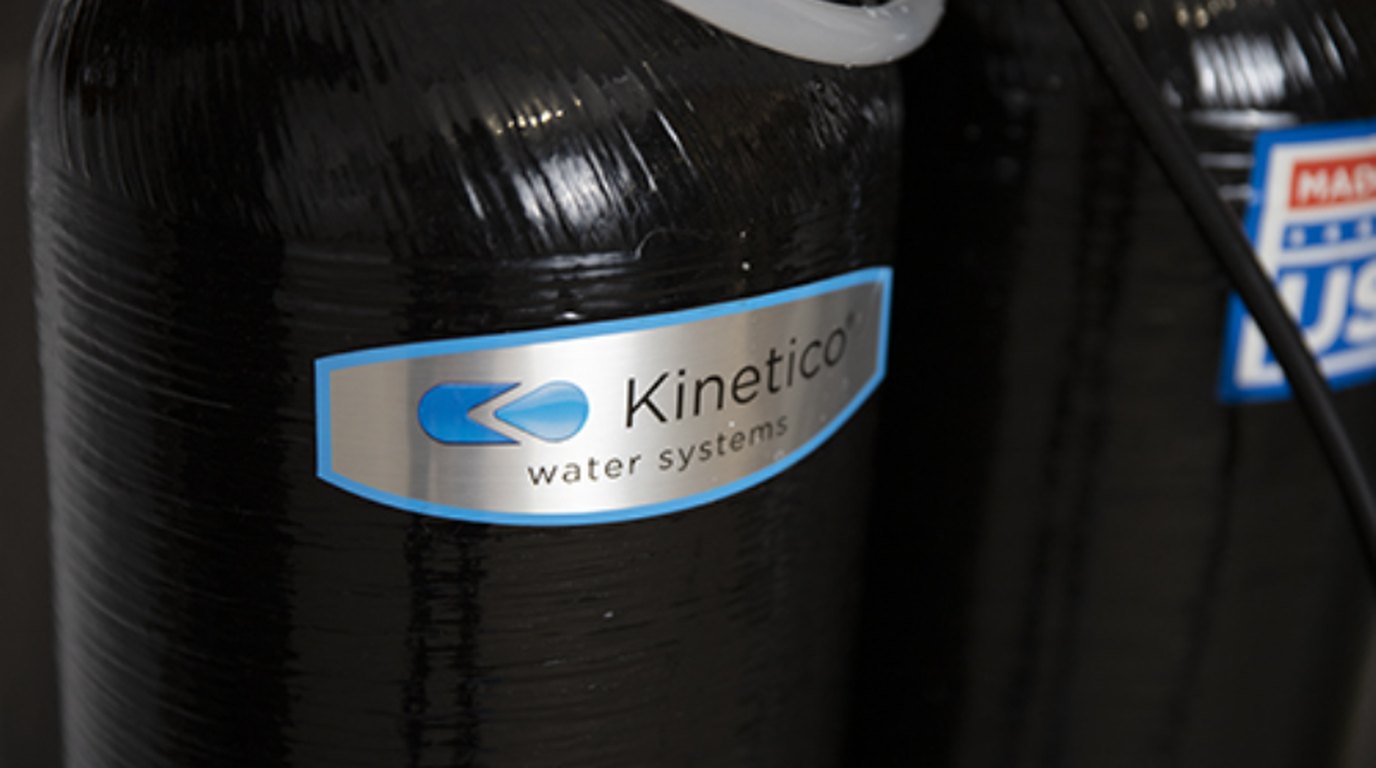
For a Hilliard home on city water the recommendation is normally a Kinetico twin tank softener. Non-electric, so nothing plugs in and nothing needs a circuit found for it. Twin tank, so one side treats while the other regenerates and the house never gets a stretch of untreated water.
If taste at the kitchen sink is also on your list, that is a separate device. A K5 drinking water station goes under the sink and handles drinking and cooking water, and it is the one people notice at the coffee maker. Both are made at Kinetico's plant in Newbury, Ohio.
See what your Hilliard water tests at
Twenty minutes at your kitchen counter, results in front of you, nothing to pay. Call (614) 555-0100.