Orange and Rust Stains from Your Water? Iron Is the Problem.
Iron stains are stubborn to clean but straightforward to prevent permanently.
What causes iron staining?
Iron in drinking water comes in two forms, and understanding which form you have determines the right treatment.
Ferrous iron (dissolved iron)
Ferrous iron is completely dissolved in water. It is invisible, colorless, and impossible to detect by looking at your water in a glass. However, when this dissolved iron contacts oxygen, such as when it hits the air or contacts a hot surface, it oxidizes and turns into iron oxide, which is rust. This is what creates those orange and brown stains on tubs, toilets, and sinks. Columbus city water can contain ferrous iron picked up from aging cast iron distribution mains. Well water in Central Ohio frequently has significant dissolved iron concentrations from the geology.
Ferric iron (rust particles)
Ferric iron is already oxidized, meaning it is solid rust particles suspended in the water. It makes water visibly orange or brown. This form is common after main breaks or pressure changes in city water, and in some well water sources. Ferric iron can be filtered mechanically, but it points to a serious iron problem.
The EPA's Secondary Maximum Contaminant Level for iron is 0.3 milligrams per liter (mg/L). Above this level, iron begins causing visible staining. Many Central Ohio well water sources test at 1 to 5 mg/L or higher, which creates severe staining problems. Even Columbus city water sometimes tests above 0.3 mg/L after distribution through older mains.
The staining starts before you see it in your water glass. By the time your water looks orange, you have a significant iron problem.
EPA iron guideline:
0.3 mg/L
The EPA's aesthetic guideline for iron in drinking water. Above this level, staining becomes visible. Many Ohio well water sources are 3 to 10 times higher. A free water test will tell you your exact level.
Signs you have an iron problem
These symptoms range from obvious visual staining to subtler signs that iron is causing damage throughout your home.
Orange or brown stains on fixtures
Rust-colored staining in bathtubs, showers, toilet bowls, and around drains is the most obvious sign of iron. These stains are particularly resistant to regular cleaning products and come back quickly after scrubbing because the source of the staining is still present in every drop of water.
Rust-stained sinks and aerators
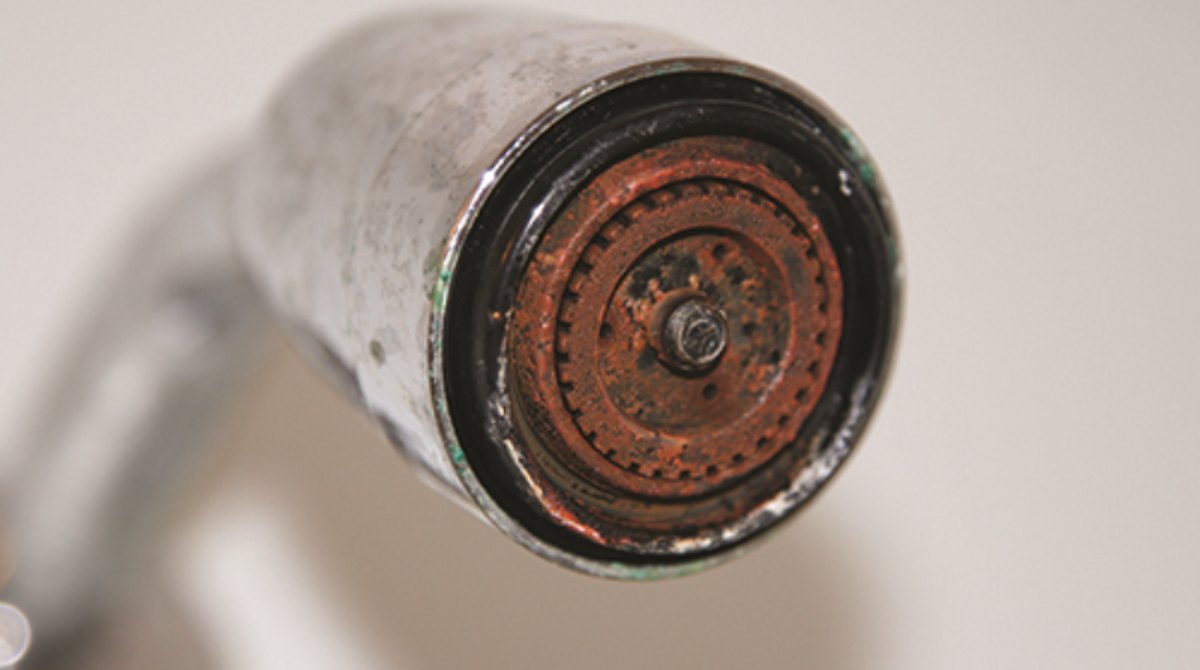
Iron deposits build up inside faucet aerators and around sink drains, creating reddish-brown scale that narrows openings and reduces flow. The areas where water sits or dries accumulate the most staining. Kitchen sinks, bathroom vanities, and utility sinks are all affected.
Orange-tinged laundry
Iron in the wash water deposits on fabric during the wash cycle, leaving a rust-colored tint on white or light-colored clothing and linens. This damage is often permanent. Bleach makes it worse because chlorine bleach oxidizes dissolved iron, turning it into rust stains right in the washing machine drum.
Metallic taste in water
Iron gives water a distinct metallic or blood-like taste even at concentrations below the visible staining threshold. If your water tastes metallic and you are on city water, this is worth investigating, since it can also indicate old lead pipes in addition to iron.
Staining on outdoor surfaces
If you use well water for irrigation, iron in the water leaves orange streaks on driveways, sidewalks, siding, and outdoor furniture wherever the sprinkler system hits. These rust stains on concrete and masonry are extremely difficult to remove and are a common complaint from Central Ohio homeowners on well water.
Reduced water pressure
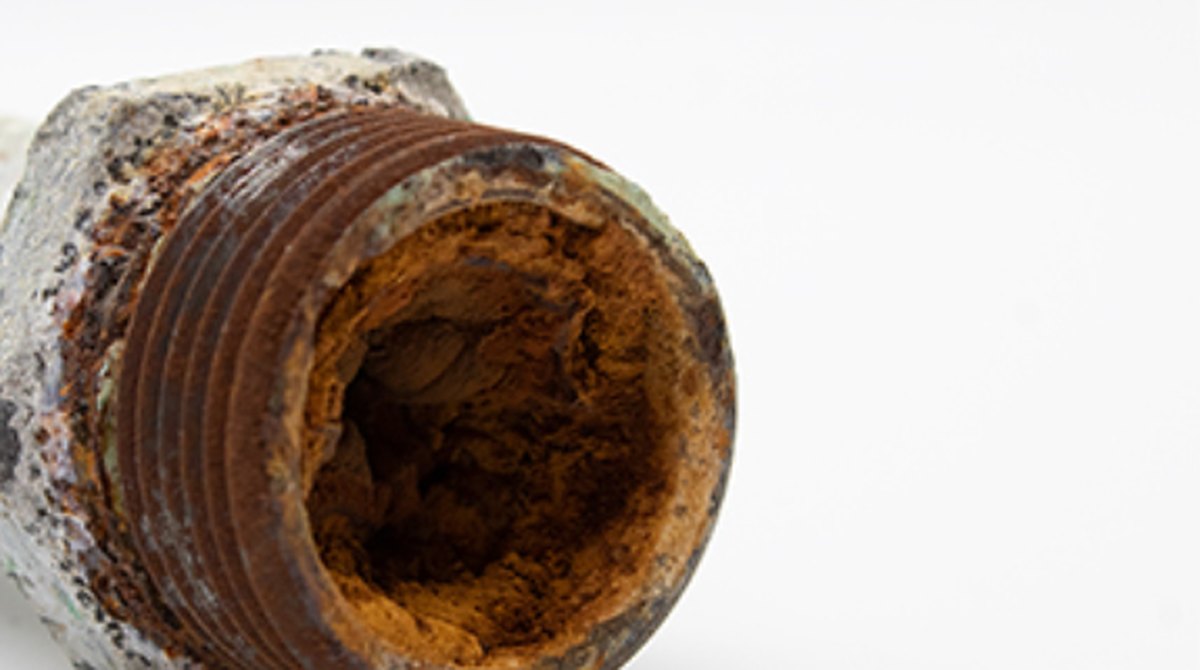
Over years, iron deposits build up inside pipes and water-using appliances, narrowing the passages through which water flows. This gradually reduces water pressure throughout the home, strains water heaters and pumps, and can eventually cause pipe failure. This is particularly common in homes with private wells where iron has gone untreated for many years.
The real cost of iron in your water
The ongoing cost of iron staining goes well beyond the time and frustration of trying to clean it. Every approach to managing iron staining without treating the source creates its own costs.
Cleaning chemicals damage what they clean
Removing iron stains requires acid-based products such as CLR, rust removers, and oxalic acid cleaners. These chemicals are effective against iron but they also etch grout, dull fixture finishes, degrade caulk, and damage stone surfaces over time. You end up spending money on chemicals that do temporary work while causing slower, longer-term damage to the very surfaces you are trying to protect.
Laundry staining is often permanent
Once iron has bonded to fabric, especially when bleach has been used during the same wash cycle, the rust stain is frequently set permanently. Iron-stained clothing and linens are often not salvageable. Over time, the cost of replacing stained laundry adds up significantly.
Fixtures and appliances need early replacement
Iron buildup inside washing machines, dishwashers, water heaters, and irrigation systems causes corrosion and premature failure. The iron scale also harbors bacterial growth, particularly iron bacteria, which creates slime deposits and further damages equipment.
Preventing iron staining is far cheaper than cleaning it.
The cost of an iron removal system, spread over its operating life, is typically a fraction of the ongoing cost of stain cleaning products, replacement laundry, and early appliance replacement.
Get a Free Water TestKinetico iron removal solutions
The right solution depends on your iron level, water source, and whether hard water or other problems are also present. A free water test tells us exactly what you need.
Specialty Iron and Manganese Filter
Kinetico's specialty iron filter uses an oxidizing media bed to convert dissolved ferrous iron into solid particles that are then captured and backwashed out of the system. This same process also removes manganese, which frequently accompanies iron in Ohio well water and causes black or brownish-black staining.
The system requires no added chemicals to operate, uses no electricity, and is sized based on your actual iron level and flow rate requirements. It handles both ferrous (dissolved) and ferric (particulate) iron.
This system is the right choice when iron is the primary problem and water hardness is moderate or already being treated.
View Specialty Treatment SystemsSoftener and Specialty Filter Combination
For Central Ohio homes on well water, it is very common to have both significant iron levels and very high water hardness. In these situations, a single-system approach is rarely enough. A water softener handles the hardness and some ferrous iron at moderate levels, but when iron is high it will foul the softener resin and reduce the system's effectiveness and lifespan.
The better solution is a specialty iron filter installed upstream of the softener, so iron is removed before it reaches the resin. The softener then handles the remaining hardness without being compromised by iron fouling.
If you are also dealing with hydrogen sulfide (rotten egg smell), an iron and sulfur filter can handle both simultaneously. We design the right combination based on your actual test results.
View Water SoftenersNot sure which system is right for your iron level? A free water test gives us the specific numbers we need to make the right recommendation.
Request a Quick QuoteCommon questions about iron in Columbus water
Water softeners can remove small amounts of dissolved ferrous iron through the ion exchange process, typically up to about 1 to 2 mg/L depending on the system. But softeners are not designed for iron removal. When iron levels are higher, iron will foul the resin bed, reducing the softener's effectiveness and eventually requiring expensive resin replacement. For homes with moderate to high iron levels, a dedicated iron filter installed upstream of the softener is the right approach. The iron filter removes the iron first, protecting the softener resin so it can do its job on hardness.
At typical residential levels, iron in drinking water is not a health hazard. Iron is an essential mineral the body needs, and the amounts present in most household water do not exceed what is harmful. The EPA's secondary maximum contaminant level for iron is a guideline for aesthetics, not health. However, at high iron levels, water can taste metallic and unpleasant. High iron levels also support the growth of iron bacteria, which form biofilm deposits in pipes and water-using equipment that can harbor other organisms. A water test will tell you exactly how much iron is in your water and whether it falls within normal ranges.
The EPA's Secondary Maximum Contaminant Level (SMCL) for iron is 0.3 mg/L, which is set for aesthetic reasons, meaning it is the level above which you are likely to notice taste, odor, and staining problems. Columbus city water is generally maintained below this level, but aging cast iron distribution mains can add iron between the treatment plant and your tap, particularly after main disturbances or pressure changes. Well water in Central Ohio commonly exceeds 0.3 mg/L, and it is not unusual to see levels of 1 to 5 mg/L or higher in private wells throughout Franklin, Delaware, Licking, and Pickaway counties.
Sometimes, if treated promptly and correctly. Products containing oxalic acid (such as Iron Out) or sodium hydrosulfite can remove fresh iron stains from fabric. The key is to avoid using bleach, which sets iron stains permanently by oxidizing dissolved iron into solid rust. Once bleach has been applied to iron-stained laundry and dried, the stain is typically permanent. For moderate iron staining caught early, pre-soaking with an iron stain remover before washing can be effective. But the real answer is prevention: treating the iron at the source means it never reaches your washing machine in the first place.
Yes. This is one of the most common misconceptions about iron in water. Ferrous iron, the dissolved form, is completely invisible in water. Your water can look perfectly clear in a glass and still contain iron at 3 to 5 mg/L, which is 10 to 15 times the EPA aesthetic guideline. The iron only becomes visible when it contacts oxygen, either in the air or on a hot surface, and oxidizes into rust. This is why the staining appears in places where water sits, drips, or dries: around drains, on toilet bowls, and on faucet surfaces. If you have orange staining but clear water, you almost certainly have dissolved ferrous iron that needs treatment.
Get a free water test. Find out your exact iron level.
We test your water on-site, tell you exactly what iron level you are dealing with, and recommend the right Kinetico system to eliminate it permanently. No staining, no cleaning chemicals, no laundry damage.