Iron in Ohio Well Water: A Very Common Problem
Iron is one of the most common issues in Central Ohio well water. It comes from the same limestone and dolomite geology that causes hardness. As groundwater moves through iron-bearing rock formations, it dissolves iron compounds. The result is well water that may range from barely noticeable to severely staining everything it touches.
Homeowners on private wells in Delaware, Licking, Fairfield, Pickaway, and Union counties all deal with iron at various levels. The problem is not rare and it is not unusual. But it does require identifying which type of iron you have before choosing a treatment approach, because the wrong treatment will either fail entirely or damage your equipment.
Three Types of Iron
Understanding which type of iron you have is essential because each requires different treatment.
Ferrous Iron (Dissolved Iron)
Also called "clear water iron," ferrous iron is dissolved in the water and invisible when you first draw it. The water looks clear when it comes out of the tap. But leave a glass of it on the counter for 10 to 15 minutes and it turns orange as the dissolved iron oxidizes on contact with air. Ferrous iron can be handled by a water softener at low concentrations, but above 2 to 3 mg/L (milligrams per liter), it will foul the softener resin and reduce its effectiveness over time.
Ferric Iron (Oxidized Iron)
Ferric iron is already oxidized. It shows up as visible rust-colored particles in the water, often visible immediately from the tap. This iron is not dissolved. It is particulate. It requires physical filtration to remove. A water softener alone cannot handle ferric iron, and sending ferric iron through a softener can clog and damage the resin bed.
Iron Bacteria
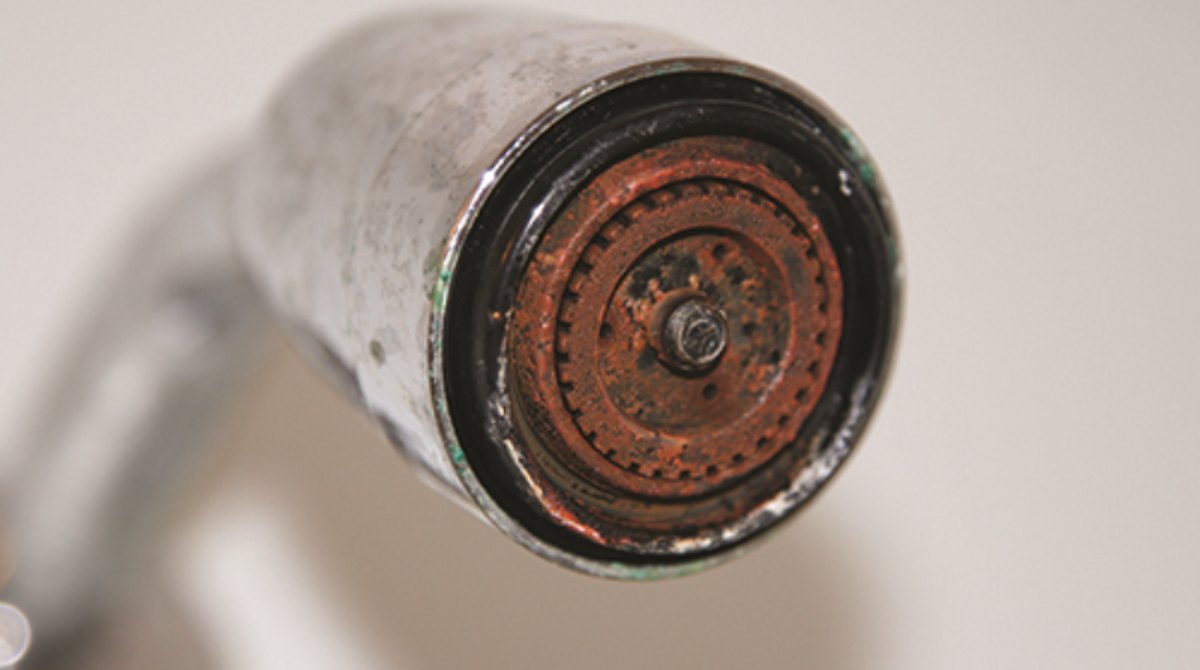
Iron bacteria are microorganisms that are not an iron form themselves, but are often found alongside high-iron water. They appear as reddish, gelatinous slime in toilet tanks, around faucet aerators, and inside pipes. Iron bacteria produce a distinctive musty or swampy odor. They are not a direct health threat in most cases, but they are unpleasant and can clog plumbing and treatment equipment. Iron bacteria require disinfection treatment, not just filtration.
Signs of Each Type
- Ferrous iron: water is clear from the tap, turns orange in a glass after a few minutes; orange staining on surfaces that are in contact with water long-term, including sink basins, toilet bowls, and tub surrounds.
- Ferric iron: visible rust-colored particles immediately in a glass of water; orange-red sediment in toilet tanks; water that looks discolored directly from the tap.
- Iron bacteria: reddish-brown or tan gelatinous slime in toilet tank or around faucets; distinctive musty or oily odor; possible slimy buildup inside pipes over time.
Testing for Iron
A basic iron test will tell you total iron content. More detailed testing distinguishes ferrous from ferric iron and detects manganese, which is often present alongside iron in Ohio wells. Cardinal Water Solutions includes iron testing as part of our free well water analysis. Knowing your iron level and type determines which treatment approach is right for your home.
Do not guess based on symptoms alone. Two homes a quarter-mile apart can have very different iron situations based on where their wells are drilled and which formation they draw from. A test takes the guesswork out of the selection process and prevents investing in equipment that will not solve the actual problem.
Treatment Options by Iron Type
Low Ferrous Iron (Under 2 to 3 mg/L): Water Softener
At lower concentrations of dissolved ferrous iron, a properly maintained water softener will remove iron during the ion exchange process. The iron is flushed out during regeneration along with calcium and magnesium. This works well in the lower range, but the softener should be maintained with periodic resin cleaner added to the brine tank to prevent iron fouling over time. An annual service check helps catch any early fouling before it becomes a problem.
Higher Ferrous Iron (3 to 10+ mg/L): Dedicated Iron Filter
Above 2 to 3 mg/L, a dedicated iron filter is recommended before the softener. Iron filters use one of several approaches:
- Air injection: oxidizes the dissolved iron inside a tank, then filters out the resulting particles as they settle.
- Catalytic media: iron-removing media such as Filox or Birm accelerates oxidation and filtration in a compact vessel.
- Greensand filtration: manganese greensand media oxidizes and filters both iron and manganese simultaneously.
Kinetico offers non-electric iron filter systems that use backwashing to clean the media automatically, with no electrical components to fail.
Ferric Iron: Sediment Filtration
Ferric iron (particulate) requires physical filtration. A whole-house sediment filter, typically rated at 5 to 20 microns, captures the rust particles before they enter the home's plumbing. However, if you also have dissolved ferrous iron alongside ferric, an iron filter handles both types. A sediment filter alone is not sufficient for dissolved iron. Know what you have before selecting equipment.
Iron Bacteria: Shock Chlorination Plus Ongoing Disinfection
Iron bacteria require disinfection, not filtration. The well should be shock-chlorinated: a concentrated bleach solution is added to the well to kill the bacteria, then flushed. This is a one-time remediation step. A UV disinfection system installed at the point of entry provides ongoing protection against bacterial recontamination. UV systems use ultraviolet light to destroy bacteria and other microorganisms without adding chemicals to the water.
Manganese: Often Present Alongside Iron
Manganese accompanies iron in many Ohio wells. It causes black or dark brown staining, particularly visible on sinks, toilet bowls, and fixtures. The same iron filter media that handles iron often handles manganese, but the treatment parameters may need adjustment based on manganese concentration.
Manganese has EPA health-based guidelines, and elevated levels are a particular concern for children's neurological development. The EPA health advisory level for manganese is 0.3 mg/L. If your water test shows elevated manganese, it should be addressed specifically, not assumed to be covered by iron treatment alone.
Treatment Sequence Matters
The order of treatment equipment in your plumbing matters significantly. For well water with iron, the typical correct sequence is:
- Sediment pre-filter: protects downstream equipment from particulates that could clog valves and media.
- Iron and sulfur filter: removes iron and hydrogen sulfide before the water reaches the softener.
- Water softener: removes residual hardness after iron has already been addressed.
- UV disinfection: bacteria protection, installed after all filtration so the UV light is not blocked by particles.
- Under-sink RO system: drinking water treatment, installed after whole-house treatment.
Running high-iron water through a softener without prior iron treatment fouls the resin quickly and can permanently damage it. The resin becomes coated with iron deposits and loses its ability to soften effectively. This is the most common and costly mistake we see with Central Ohio well water customers who purchased a softener without a prior water test.
How Much Iron Is Too Much?
The EPA secondary standard for iron is 0.3 mg/L. This is an aesthetic standard, not a health-based limit, established at the level above which staining typically occurs. Iron concentrations in Ohio well water commonly range from 0.5 mg/L to well over 5 mg/L. Above 1 mg/L, staining is noticeable. Above 3 mg/L, it is significant. Above 5 mg/L, it is severe and can stain laundry, fixtures, and appliances rapidly.
There is no upper health limit for iron in drinking water under EPA regulations, but very high iron levels can contribute to a metallic taste and create conditions favorable to iron bacteria growth. Most Ohio well owners with visible staining are dealing with levels between 1 and 8 mg/L, and effective treatment is straightforward once the level is known.
Cardinal Water Solutions tests for iron as part of our free well water analysis. If you have staining, orange water, or any of the signs described above, call (614) 555-0100 and we will test your water and explain exactly what treatment you need. No charge, no obligation.
Schedule Free Water AnalysisRelated Articles
Complete Guide to Well Water Treatment in Central Ohio
A comprehensive overview of the most common well water problems in Ohio and how to address each one with the right equipment.
Read Article
Water Softener vs. Water Filter: Which One Do You Actually Need?
Softeners remove hardness minerals. Filters remove contaminants. They solve different problems, and confusing them leads to buying the wrong solution.
Read Article
What Is Reverse Osmosis and Is It Worth It for Your Home?
Reverse osmosis removes a broad range of contaminants from drinking water. Here is how it works and whether it makes sense for your household.
Read Article