Water treatment in Columbus, Ohio
Hard city water is the constant across every Columbus neighborhood. Here is what that looks like in your house, and what fixes it.
City water, and it comes to you hard
Almost every home inside the Columbus city limits is on municipal water. That means the water arriving at your meter has already been treated and disinfected before it reaches your street, and it is consistent from one week to the next. What it is not is soft.
Central Ohio sits on limestone bedrock. Water moving through limestone picks up calcium and magnesium, and those two minerals are what hardness actually is. Treating water for a whole city does not remove them, because hardness is not something a municipal plant is asked to take out. It arrives at your house exactly as hard as it left the plant.
So the water problems we get called about in Columbus are remarkably consistent from Clintonville to the Hilltop to the south side. Scale, spotting, soap that will not rinse, and water heaters that quit early. Different neighborhoods, same chemistry.
How hard is Columbus water?
Our hard water page puts the city supply at 15 to 22 grains per gallon. Anything above 10.5 is considered very hard. Your own reading is the one that matters, and we take it in your kitchen for free.
What Columbus homeowners actually call about
These are the three reasons the phone rings from a city address.
White crust on everything
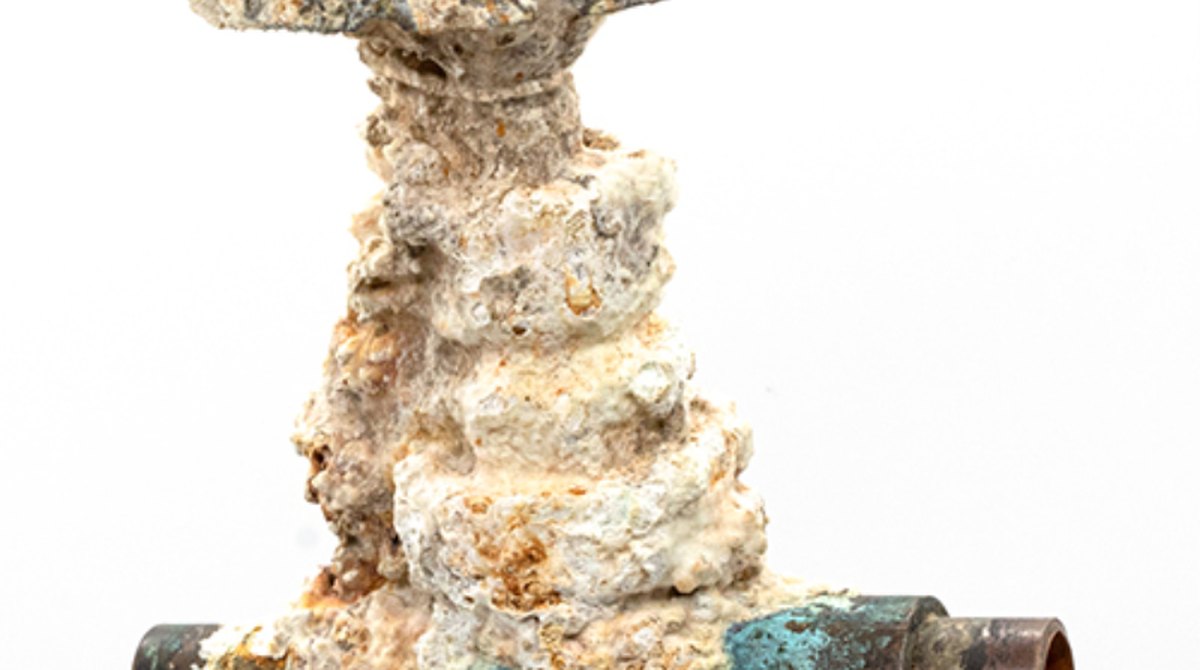
Around the base of the faucet, on the showerhead, on the inside of the kettle. That is calcium coming out of solution as the water dries or heats. The same thing is happening inside your water heater where you cannot see it.
A chlorine smell at the tap
Disinfectant is doing its job on the way to your house, and some of it is still there when you pour a glass. People notice it most in coffee, in iced tea, and in the ice maker. See taste and odor for what causes it.
Laundry that comes out stiff
Hard water keeps detergent from rinsing all the way out of fabric. Towels lose their loft, dark clothes go dull, and people compensate by adding more soap, which makes it worse rather than better.
A softener first, a drinking water station second
For a Columbus house on city water, the answer is nearly always a Kinetico water softener sized to the household. Kinetico softeners are non-electric and twin tank. They run on the pressure of the water moving through them, and they regenerate on measured volume rather than on a clock, so a house that uses very little water on a Tuesday does not regenerate as if it were a Sunday.
The twin tank part matters more in a city house than people expect. One tank is always in service while the other is regenerating, so there is no window overnight when hard water slips through to the water heater.
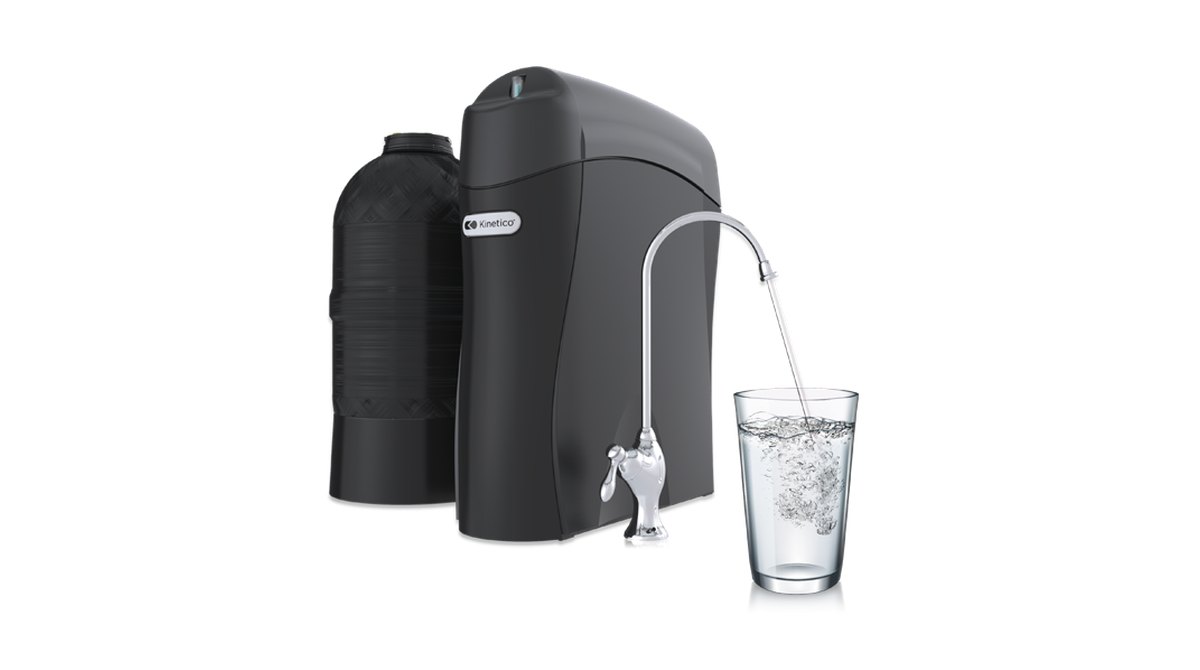
If the reason you called is taste rather than scale, the second half of the answer is a K5 drinking water station at the kitchen sink. That is the part that takes the chlorine flavor out of the coffee.
Older Columbus houses take a little more thought
A good part of the city was built before anyone was thinking about where a softener would go. Stone foundations, low basement ceilings, a main line that comes in behind the stairs, and no floor drain within reach. None of that is a problem, but it does change how we plumb the loop, and it is the reason we would rather look at the space in person than quote off a phone call.
Because Kinetico equipment is non-electric, there is one thing we do not have to solve: finding an outlet. In a basement where the nearest receptacle is across the room and already full, that removes an electrician from the job entirely.
Newer construction on the outer edges of the city usually has a softener loop roughed in already, which makes for a short, tidy installation. Either way, we tell you what is involved before we start.
Find out what your Columbus water is really like
The in-home test takes about twenty minutes, we do it at your kitchen counter, and it costs nothing. Call (614) 555-0100 or book online.