Complete guide to well water treatment in Central Ohio
Why Ohio well water is different from city water
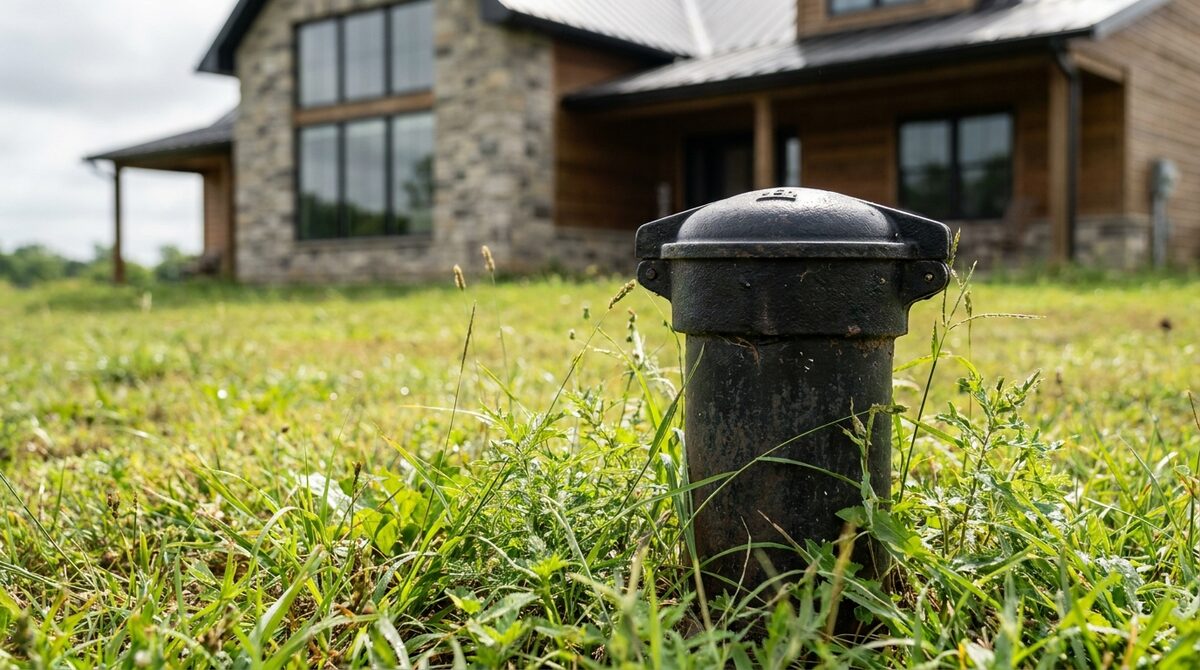
If your home uses a private well, you are responsible for testing and treating your own water. The EPA regulates public water systems, but private wells fall entirely on the homeowner. Ohio's geology, particularly Central Ohio's limestone and dolomite aquifers, means well water here often carries significant hardness, iron, and mineral content with no obvious color or smell to warn you.
Columbus city water is treated and tested by Columbus Water, a public utility. Well water in Franklin County and the surrounding counties is not. Westerville, New Albany, Delaware County, Licking County, Fairfield County, and Union County all have substantial populations on private wells. If you are one of them, this guide is worth reading carefully.
Ohio geology and your well water
Central Ohio sits on Paleozoic limestone and dolomite formations. Groundwater moving through these formations dissolves calcium and magnesium, producing very hard water. Well water hardness in Central Ohio commonly runs 15 to 30 or more grains per gallon (gpg), compared with Columbus city water at 15 to 22 gpg. Many wells in the region also have elevated iron and manganese from the same aquifer geology.
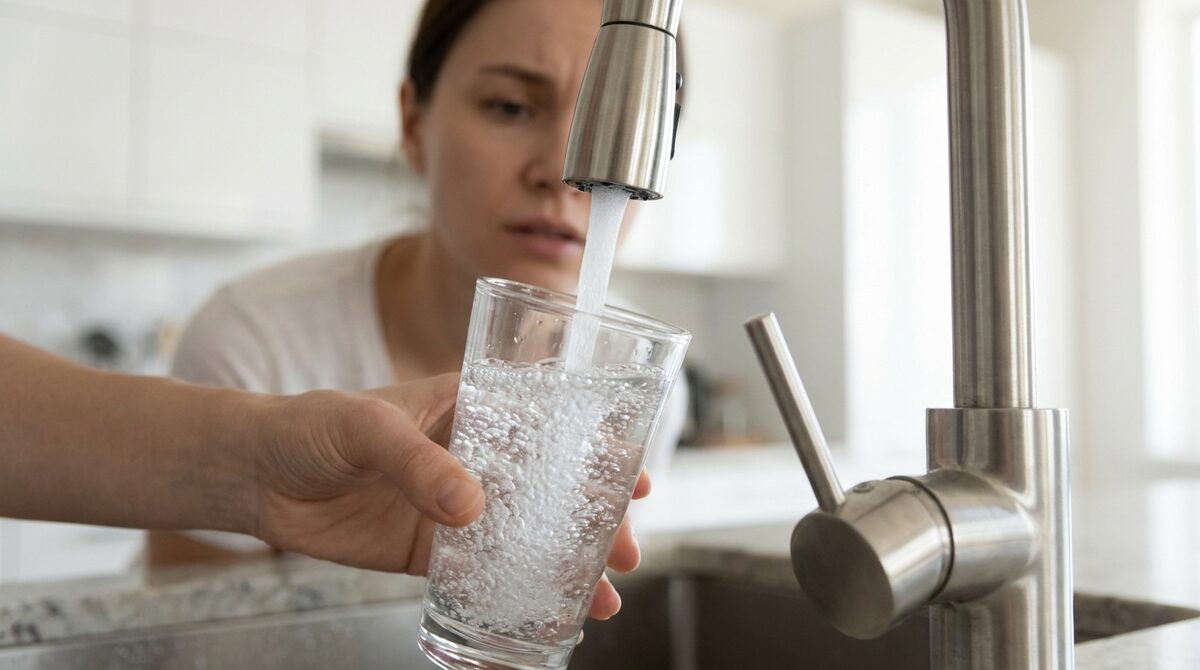
Areas near agricultural land can also see nitrates from fertilizer and runoff, and areas near older industrial sites may have elevated metals. None of this is detectable without testing. The water can look completely clear and still carry minerals and contaminants that affect your plumbing and your water quality.
What to test your well water for
Annual testing is the standard recommendation from the Ohio Department of Health and the EPA. At minimum, test for hardness, iron and manganese, pH, hydrogen sulfide (the rotten egg smell), nitrates, bacteria (total coliform and E. coli), and arsenic, which is relevant in some Central Ohio areas.
Hardness
Hardness is almost universally high in Central Ohio wells. Even 15 gpg is classified as very hard. Some wells in Delaware and Licking counties test above 30 gpg. Hardness is expressed in grains per gallon or milligrams per liter (mg/L), where 1 gpg equals roughly 17.1 mg/L. Hardness is the primary driver for sizing a water softener and projecting how much salt it will use each year.
Iron
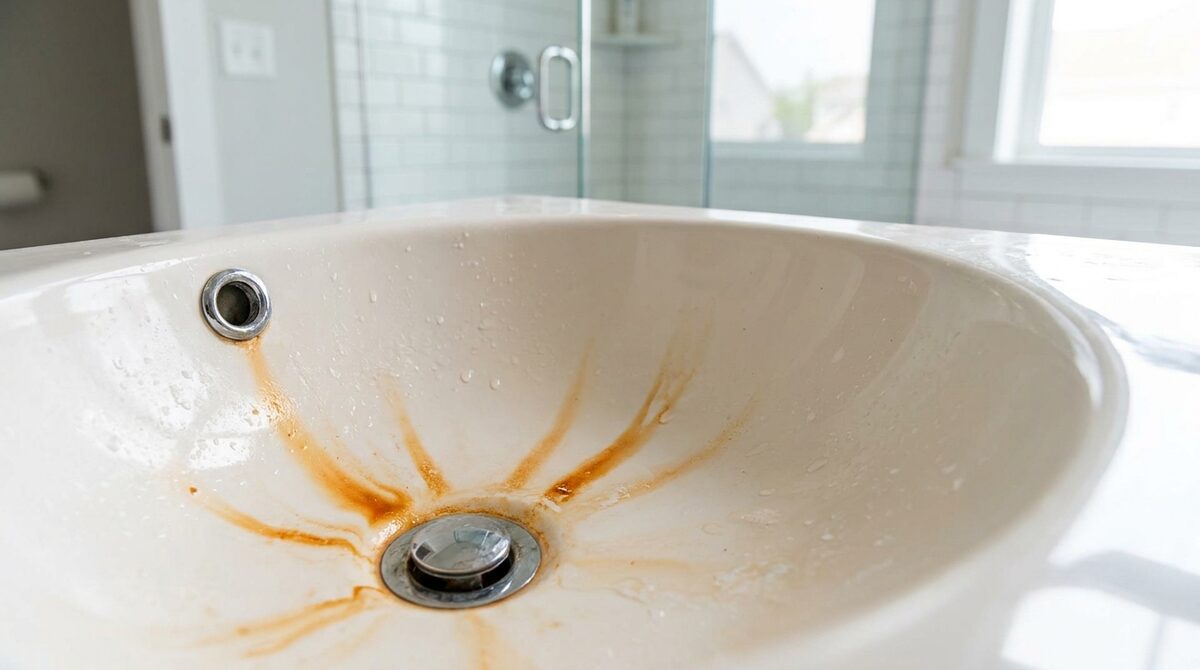
Iron occurs in two forms in Ohio well water. Ferrous iron is dissolved and invisible as it comes from the tap, but turns orange when it contacts air, which you see as orange staining around drains, in toilet tanks, and on laundry. Ferric iron is already oxidized and appears as rust-colored particles in the water. High iron fouls softener resin quickly and causes orange staining on sinks, tubs, fixtures, and clothing. Your water test tells you which type is present and how much.
Manganese
Manganese often accompanies iron in Central Ohio aquifers. It causes black or dark brown staining that is particularly stubborn. The EPA has established a secondary standard of 0.05 mg/L for manganese, and removing it effectively requires the right treatment media. Your water test confirms whether manganese is present and at what level.
pH
Ohio well water pH varies considerably by location and well depth. Acidic water below 7.0 can corrode copper plumbing, causing blue-green staining at drains and fixtures. Alkaline water above 8.5 can scale heavily and affects which treatment systems perform well. pH also influences whether iron is in ferrous or ferric form, which changes the treatment approach.
Hydrogen sulfide
Hydrogen sulfide produces the rotten egg smell that some Ohio well owners deal with. It occurs naturally in certain aquifer formations. At typical well water concentrations it is not a health risk, but it is distinctly unpleasant and can interfere with appliance performance and water taste. In some cases it also points to sulfur-reducing bacteria.
Nitrates
Nitrate from agricultural runoff is a real consideration in Central Ohio. The EPA maximum contaminant level for nitrate in public water is 10 mg/L. If you are in an agricultural area or have an older, shallow well, nitrate testing is worth including and repeating annually so you have a current reading.
Bacteria
Total coliform and E. coli testing should be done annually for all private wells, and again after any flooding, well system work, change in water appearance or taste, or known contamination event in your area. A positive coliform result calls for action such as shock chlorination or other disinfection, followed by re-testing to confirm the issue is resolved.
Arsenic
Some areas of Ohio have naturally occurring arsenic in groundwater from geological sources. The EPA maximum contaminant level is 0.010 mg/L (10 parts per billion). Parts of Central Ohio, including portions of Delaware and Licking counties, have elevated natural arsenic. Arsenic has no taste or odor, so if you have never tested your well for it, it is worth adding to your next test.
A typical Central Ohio well water treatment stack
Most Central Ohio well owners need a combination of systems rather than a single device. The right combination depends entirely on your water test results. Here is the logical progression from whole-house entry to drinking water, and what each stage addresses.
Stage 1: sediment filtration
A whole-house sediment filter, typically rated 5 to 20 micron, removes sand, grit, and particulate matter before it enters any treatment equipment. This is the first line of protection for everything downstream. Sediment can foul iron filter media, degrade softener resin, and clog RO membranes. A simple, inexpensive sediment pre-filter protects the entire system, and the cartridge is replaced periodically, typically every 3 to 6 months depending on the sediment load.
Stage 2: iron and sulfur treatment
If iron is above 2 to 3 mg/L, or if hydrogen sulfide is present, a dedicated iron and sulfur treatment system comes before the softener. This sequencing is critical. Running high-iron water through a softener without removing the iron first fouls the resin rapidly, leading to expensive resin replacement and reduced performance. Kinetico's non-electric iron filters use air injection or catalytic media to oxidize and capture iron and sulfur compounds without any electricity or added chemicals. Manganese is addressed at this stage as well, with media selected based on your water test.
Stage 3: water softener
After iron and manganese are reduced to acceptable levels, a properly sized water softener handles the hardness. With Central Ohio well water commonly at 20 to 30 gpg, sizing matters. A softener sized for 15 gpg city water will be undersized for 28 gpg well water, regenerating too often or delivering inadequately softened water. Kinetico's demand-based regeneration is especially valuable for well water, since consumption patterns vary and the high hardness levels require precise management. The twin-tank design also means continuous soft water, even through regeneration cycles.
Stage 4: UV disinfection
If bacteria has ever been detected in your well, or if you want ongoing protection regardless of test history, an ultraviolet (UV) disinfection system provides continuous protection without adding chemicals. UV light at 254 nanometers disrupts the DNA of bacteria, viruses, and cysts as water flows through the chamber, so they cannot reproduce. This installs at the point of entry, after filtration, so that filtered water flows through the UV unit. UV bulbs degrade over time and need annual replacement, because output diminishes before a bulb visibly fails.
Stage 5: drinking water reverse osmosis
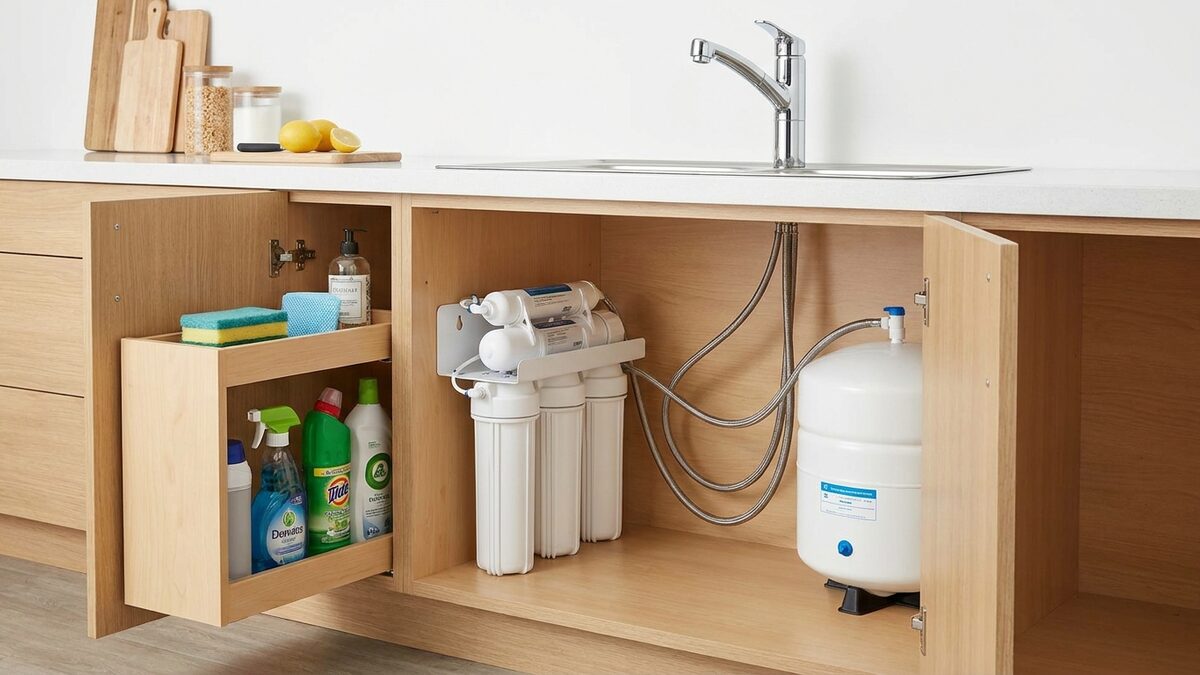
A point-of-use reverse osmosis system installed under the kitchen sink provides the final stage of treatment for drinking and cooking water. The Kinetico K5 Drinking Water Station reduces nitrates, arsenic, lead, and a wide range of dissolved contaminants, and it holds more NSF certifications than any competing residential RO system. If your well has elevated nitrates, arsenic, or other parameters you want to address, an RO system adds a focused layer of treatment on top of your whole-house equipment.
Do I need all five stages?
Not necessarily, and the answer comes from your water test results rather than a general recommendation. A well with low iron, no bacteria concern, and moderate hardness might only need a water softener. A well near active cropland with high iron, very hard water, elevated nitrates, and a history of coliform issues might need all five stages in sequence.
The point is to match treatment to chemistry, not to sell equipment. That is exactly why Cardinal Water Solutions starts with a water test rather than a product recommendation.
DIY vs. professional installation
Whole-house well water treatment is more involved than city water treatment, and the sequencing of stages is not optional. The order matters. Iron must come out before the softener. Sediment filtration protects everything downstream. UV disinfection goes at the end of whole-house treatment and before the point-of-use drinking water system. Getting the sequence wrong does not just reduce effectiveness, it can damage expensive equipment, foul media that costs hundreds of dollars to replace, and leave you with a false sense of security about your water.
Professional installation ensures the system is sized correctly for your specific water chemistry and consumption, installed in the proper sequence, and set up with the right media and settings from day one. It also keeps your warranty coverage valid, since improper installation typically voids manufacturer warranties.
Annual service
Well water treatment systems need annual attention. A service visit typically covers sediment cartridge replacement, UV lamp replacement (UV output degrades with hours of operation, and an underperforming lamp may still glow while no longer disinfecting effectively), a salt check and brine tank inspection, a softener resin inspection for iron fouling, and a water re-test to confirm the system is performing as designed. Do not skip the annual water test on the assumption that the system is working. Confirmation testing is the only way to know.
Free well water analysis for Central Ohio homeowners
We test on-site for hardness, iron, pH, and more, and explain exactly what treatment your well water needs. No charge, no obligation.