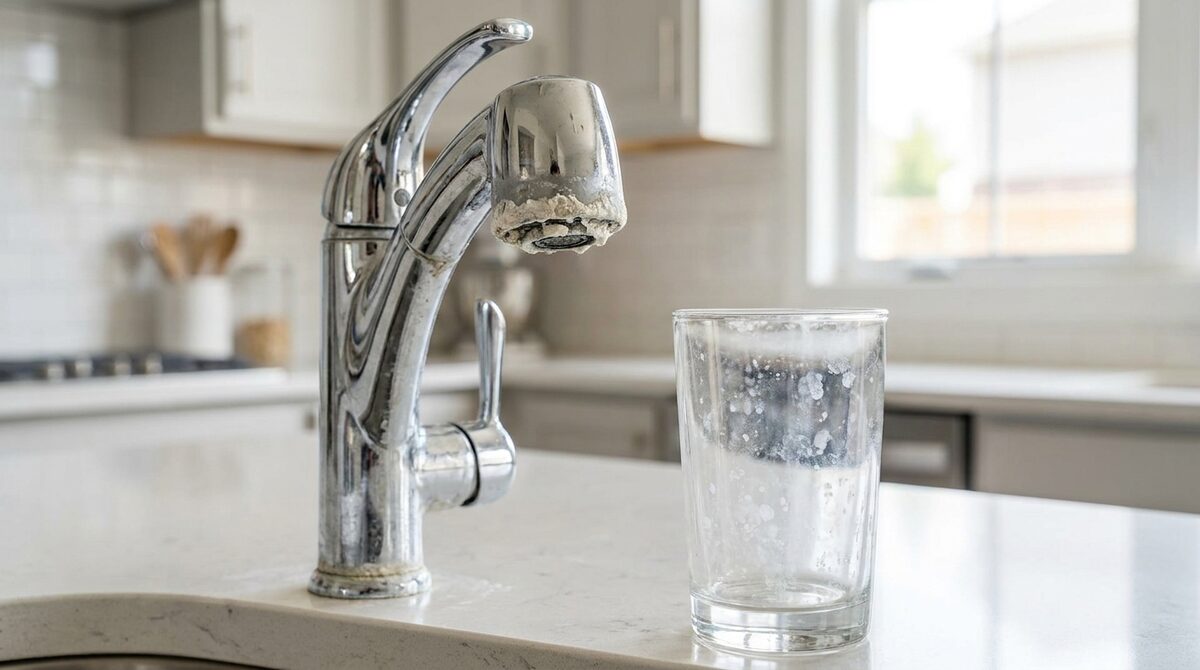
The Damage Happens Slowly
Hard water damage is insidious because it is invisible while it is happening. The scale that makes your faucets look terrible and your showerhead spray uneven is the same scale coating the inside of your water heater, dishwasher, and washing machine. By the time you notice reduced performance or shortened appliance life, the damage is already done and has been accumulating for years.
Columbus homeowners deal with 15 to 22 grains per gallon (gpg) of water hardness, which is classified as very hard. Well water in the surrounding counties often runs even higher, from 20 to 30 gpg or more. Here is what that hardness level is doing to each major appliance in your home, and what it costs when you add it up.
Water Heater
How scale damages water heaters
In a tank-style water heater, water sits inside the tank in constant contact with a heating element (in electric models) or a burner plate at the bottom of the tank (in gas models). Calcium and magnesium from hard water precipitate out of solution when the water is heated, forming a layer of mineral scale directly on the heating surface. This is exactly the same process that creates the white deposits you see around faucets and on glass shower doors.
As the scale layer thickens over months and years, it acts as an insulator between the heating element and the water it is supposed to heat. The heater has to run longer and work harder to heat the same volume of water to the same temperature. Energy use goes up. Wear on the heating element and thermostat increases. The tank itself runs hotter at the bottom as heat cannot transfer effectively through the scale layer, which stresses the tank lining.
The efficiency numbers
The U.S. Department of Energy has studied the relationship between scale accumulation and water heater efficiency in detail. A quarter-inch scale layer reduces efficiency by approximately 25 to 30 percent. A half-inch layer reduces efficiency by up to 40 percent. In Columbus, with persistent water hardness of 18 or more gpg, water heaters can develop significant scale within 3 to 5 years without any treatment. For a homeowner paying $40 per month to heat water, a 30 percent efficiency loss means paying roughly $12 to $15 more per month than necessary, every month, year after year.
Lifespan impact
A water heater running harder and longer to compensate for scale insulation wears out faster. Hard water can reduce water heater lifespan by 30 to 50 percent compared to operating on soft water. A tank-style water heater that would last 15 to 20 years on soft water may need replacement in 8 to 12 years on very hard Columbus water.
Cost
A new tank-style water heater in Columbus costs $800 to $1,800 installed, depending on size, fuel type, and contractor rates. Replacing one 5 to 7 years earlier than necessary due to scale damage is a direct financial loss. Over a 20-year homeownership period, that can mean one extra water heater replacement that soft water would have prevented.
Dishwasher
Scale on spray arms and heating element
Dishwashers clean with hot water sprayed at pressure through small holes in rotating spray arms. Those holes, typically 2 to 4 millimeters in diameter, are exactly the kind of small opening where scale accumulates over time. As scale deposits build in and around the spray holes, the holes narrow and eventually clog partially or completely. Spray coverage becomes uneven, wash pressure drops, and cleaning performance suffers. The heating element used for drying scales as well, reducing drying efficiency and eventually failing earlier than it should.
Spotted and etched glassware
The spots on glasses and dishes after the dishwasher cycle are mineral deposits left behind when hard water evaporates during drying. With repeated exposure over time, glassware develops a permanent milky cloudiness called etching. Etching is caused by the alkaline mineral content reacting with the glass surface at high temperatures over many cycles. Unlike spotting, which can be temporarily cleaned, etching is irreversible. Once your glassware is etched, it cannot be restored. The only solution is replacement.
Cost
A mid-range dishwasher costs $500 to $900 installed. Hard water can shorten its useful life by several years and permanently ruins the glassware it is supposed to clean. The cost of replacement glassware over years of dishwasher use adds up to a real number, particularly for households with quality stemware or dishes.
Washing Machine
Mineral deposits in the drum and pump
Hard water deposits accumulate in the washing machine drum, pump housing, inlet valves, and connecting hoses over time. In front-load machines, scale builds up around the door gasket and in the detergent dispenser. These deposits require more frequent maintenance and shorten the life of components that are expensive to replace. Pump failures and valve failures are among the most common washing machine repairs, and both are accelerated by hard water scale.
Effect on fabrics
Hard water prevents laundry detergent from fully dissolving, activating, and rinsing out of fabrics. Mineral ions in hard water react with soap and detergent to form soap scum rather than cleaning lather. Clothes washed repeatedly in hard water feel stiff, look faded sooner, and lose softness faster than clothes washed in soft water. Whites can develop a gray or yellowed cast over repeated washes. Towels feel rough rather than soft. These effects are gradual but cumulative, and many homeowners who switch to soft water are surprised by how much better their existing laundry feels after just a few washes.
More detergent needed
Hard water requires significantly more laundry detergent to achieve the same cleaning result because the mineral content interferes with detergent activation. Research from the American Cleaning Institute indicates that soft water can achieve equivalent cleaning performance with as little as half the detergent load. A household spending $20 per month on laundry detergent could potentially spend $10 on soft water, year after year. Over 10 years, the detergent savings alone approach $1,200.
Coffee Makers and Small Appliances
Scale in heating elements
Coffee makers, electric kettles, countertop steamers, and similar small appliances all heat water as their primary function. Scale deposits on their heating elements in the same way it does on water heaters and dishwashers, just at a smaller scale. A coffee maker's heating element that once brought water to brewing temperature in 30 seconds may take 45 or 60 seconds after significant scale accumulation. Most coffee maker manufacturers recommend monthly or quarterly descaling, but even regular descaling does not fully restore a heavily scaled element to its original efficiency. It slows the accumulation but does not eliminate it.
Taste effects
Scale accumulation inside a coffee maker affects water temperature at the brewing stage, which directly affects extraction quality and flavor. Water that is not delivered to the coffee bed at the right temperature produces under-extracted or over-extracted coffee, which tastes flat, bitter, or sour depending on the direction of the error. Coffee made in a scaled machine tastes noticeably worse than coffee made in a clean machine, even with identical beans and grind. On soft water, descaling intervals extend significantly and the machine performs correctly for longer between services.
Showerheads and Faucets
Clogged nozzles
Showerhead nozzles are small openings, typically a few millimeters in diameter or less. Scale deposits in and around these openings over time, narrowing them and eventually clogging them partially or completely. A showerhead that once delivered a strong, even spray becomes weak, uneven, and misdirected as nozzles clog with mineral deposits. Some homeowners replace showerheads every few years as a result, treating a recurring cost as normal when it is not inevitable at all on soft water.
Faucet aerators
The aerator is the small screen at the tip of every faucet that adds air to the water stream. Mineral debris carried in hard water collects on aerator screens over time, gradually reducing flow rate. The kitchen faucet that seems to be losing pressure, or the bathroom sink that flows more slowly than it used to, is very often just a clogged aerator from hard water buildup. Aerators are inexpensive to replace, but cleaning or replacing them repeatedly is a maintenance burden that soft water eliminates.
Pipes and Plumbing
Long-term scale accumulation
Scale builds up on the interior walls of pipes over years and decades. In hot water pipes, where the water is heated and minerals precipitate more readily, the scale layer gradually narrows the internal pipe diameter. A pipe that starts at a one-inch interior diameter may effectively flow like a three-quarter-inch pipe after years of scale accumulation, reducing flow to fixtures and increasing the workload on the water heater pump. In older homes with copper plumbing, scale accumulation is a long-term concern that soft water significantly slows.
Not a short-term problem
Pipe scaling takes years to develop to the point of causing noticeable pressure loss or flow restriction. But for a homeowner planning to stay in a home for 15 or 20 years, the plumbing they have today will still be in service then. The scale accumulating now is a problem that becomes more expensive to address the longer it continues.
Adding It All Up
Consider a Columbus homeowner dealing with 18 gpg hard water for 10 years without treatment. A conservative accounting of the costs might look like this:
- Water heater replaced 5 years early: $1,000 or more in installation cost
- Water heater efficiency loss of 25 percent over 10 years: $300 to $600 in extra energy
- Dishwasher replaced 3 years early: $600 or more in installation cost
- Extra laundry detergent at 40 percent more over 10 years: $400 to $600
- Showerheads replaced 3 to 4 times due to clogging: $100 or more
- Miscellaneous coffee maker descaling products, faucet aerators, cleaning products for scale removal: $200 or more
A conservative total lands at $2,500 to $4,000 over 10 years from hard water damage and waste alone, not including the time spent on maintenance, the inconvenience of early appliance failures, or the effect on laundry quality and glassware appearance.
A properly sized Kinetico water softener installed by Cardinal Water Solutions costs a fraction of that over the same period, pays for itself through appliance protection and salt efficiency, and protects every water-using appliance in the home simultaneously. The math is not close.
Cardinal Water Solutions offers a free water hardness test for Columbus and Central Ohio homeowners. Find out exactly how hard your water is, and we'll show you what a properly sized Kinetico softener would cost. Call (614) 555-0100.
Schedule Free Water AnalysisRelated Articles
How to Know If You Have Hard Water
Scale on faucets, spots on dishes, and dry skin are all signs. Here's how to recognize hard water problems and confirm with a test.
Read Article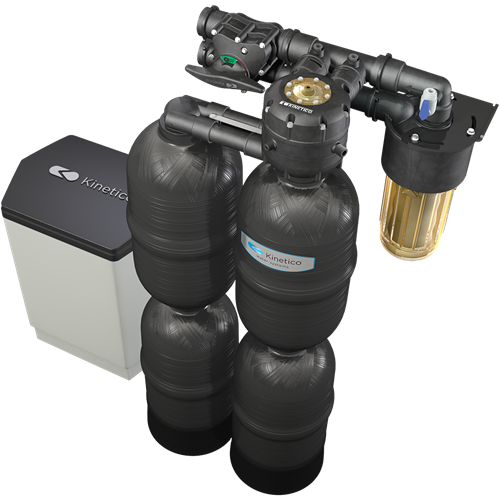
Why Non-Electric Water Softeners Last Longer and Cost Less to Run
Electric softeners fail when circuit boards, timers, and solenoid valves wear out. Kinetico's non-electric design eliminates those failure points entirely.
Read Article
Water Softener vs. Water Filter: Which One Do You Actually Need?
Softeners remove hardness minerals. Filters remove contaminants. They solve different problems, and confusing them leads to buying the wrong solution.
Read Article