What Makes a Water Softener "Electric"?
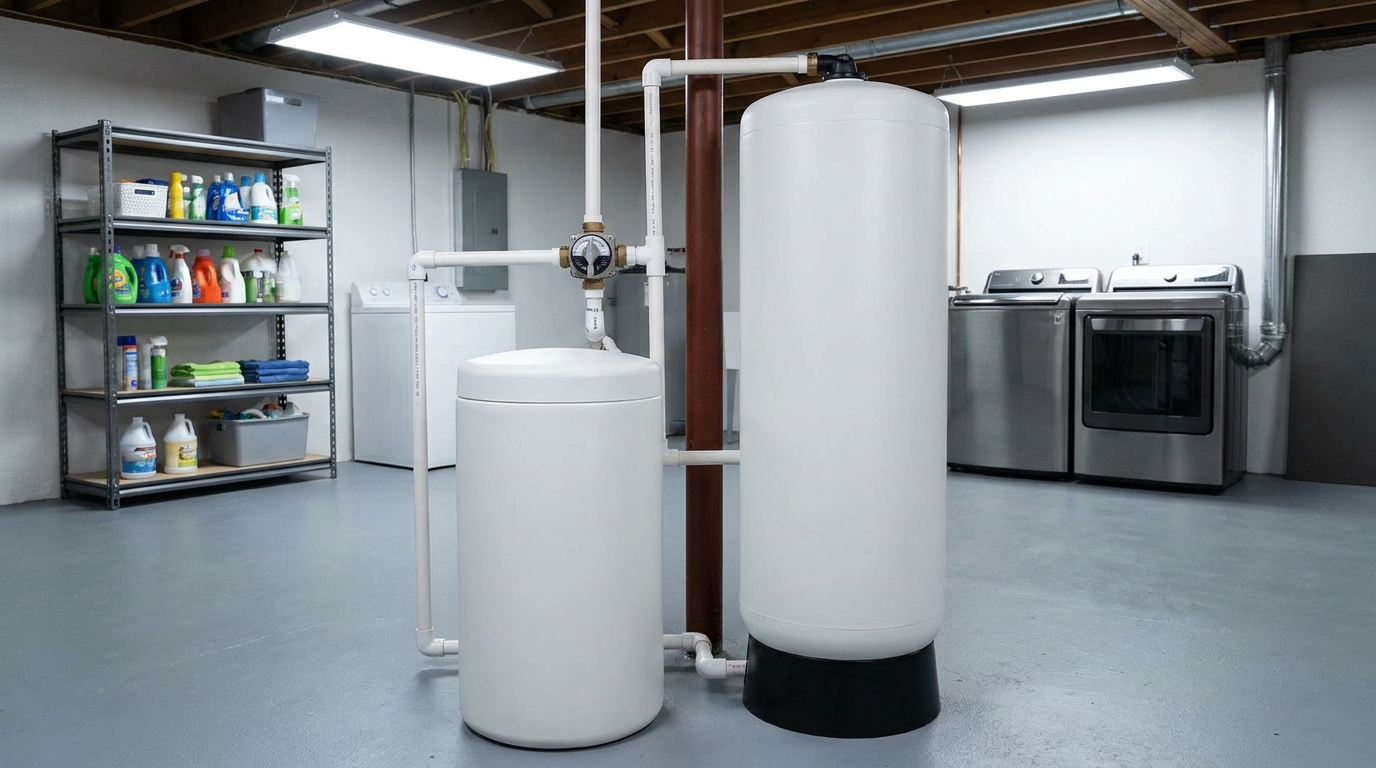
Virtually every water softener sold at big-box stores and by most national service companies uses electricity. The electricity powers several key components: a timer or digital controller that tells the system when to regenerate, a solenoid valve (electrically actuated) that controls water flow during regeneration, and a motor or actuator that moves the valve through its positions during the regeneration cycle. Each of these is a separate potential failure point, and all of them experience wear over time.
The basic design logic of an electric softener has not changed significantly in decades. What has changed is the addition of digital displays and programmable settings, which add complexity and more circuit board components without meaningfully improving the core softening performance. Many service calls we see on electric softeners come down to failed circuit boards, worn solenoid valves, or timers that have drifted out of calibration.
How Electric Softeners Fail
Timers and Control Boards
Most electric softeners regenerate on a schedule, typically every 3 to 7 days depending on how the unit is programmed. The timer or digital controller manages this schedule. When the timer fails (and it eventually does in every electric softener), one of two things happens: the softener stops regenerating entirely, which means hard water returns immediately, or the system gets stuck in a regeneration loop and runs continuously, wasting both salt and water. Digital control boards are also sensitive to power surges. A single significant voltage spike can damage or destroy the control electronics of an otherwise functional softener, turning a minor electrical event into a major appliance failure.
Solenoid Valves
The solenoid valve is an electromagnet that opens and closes to direct water flow through different paths during normal operation and regeneration. Over years of cycling open and closed thousands of times, the solenoid coil can burn out, the valve seat can warp or crack, or the O-rings can degrade from repeated cycling and exposure to mineral-laden water. Replacement requires sourcing the correct part for the specific model and typically requires a service call, as the repair involves working inside the control valve assembly.
Timers Waste Salt
The most significant operational problem with timer-based softeners is not a mechanical failure but a design limitation. Because the system regenerates on a schedule regardless of actual water use, it regularly regenerates when it doesn't need to. A household that uses very little water in a given week still triggers a regeneration when the timer fires. If you go on vacation for two weeks, the softener regenerates four or more times anyway, consuming 40 to 100 lbs of salt to treat water that no one used. This waste is built into the design.
How Non-Electric Softeners Work
Kinetico's non-electric softeners use the kinetic energy of flowing water to power the control valve mechanism. There are no electric motors, no circuit boards, no solenoid valves, and no timers. As water flows through the system, it turns a small turbine that measures the volume of water treated. The turbine drives a mechanical meter that tracks how much water has passed through the resin bed. When the resin has treated its rated capacity of water, the mechanical valve shifts to initiate regeneration. Not on a schedule. Only when the resin is actually exhausted.
The mechanical simplicity of this approach is what makes the difference in long-term reliability. Where an electric softener might have 15 to 20 electrical components including board, timer, solenoid, actuator, and wiring harnesses, a Kinetico has essentially one moving assembly in the control valve plus the standard resin and brine tank components. Fewer parts means fewer failure points. Fewer failure points means longer reliable service life.
On-Demand Regeneration: The Salt Savings
Because Kinetico regenerates only when the resin is actually exhausted, salt consumption directly tracks actual water use. A week with high water use (house guests, laundry catch-up, filling the pool) triggers more frequent regeneration. A quiet week of low water use extends the time between regenerations. The system responds to reality rather than a preset schedule.
According to Kinetico's published performance data, their demand-operated systems use up to 75 percent less salt than comparable timer-based systems under typical household conditions. For a Columbus family using a timer-based softener at current salt prices, the savings add up quickly. A timer-based softener consuming 100 lbs of salt per month costs roughly $240 to $360 per year in salt. A Kinetico consuming 30 lbs per month costs roughly $72 to $108 per year. Over 15 years of operation, that difference represents $2,000 to $3,800 in salt costs alone, before counting the additional electricity cost of the electric system.
How Long Do They Last?
The lifespan difference between electric and non-electric softeners is the most compelling long-term argument for the non-electric approach. Electric softeners, with proper maintenance and occasional component replacement, typically last 10 to 15 years before a major component failure makes continued repair impractical or uneconomical. At that point, the homeowner faces either an expensive repair or full replacement.
Kinetico non-electric systems routinely last 20 to 30 years in normal residential service. Some Kinetico units installed in the late 1990s are still operating in Central Ohio homes today. There is no circuit board to fail, no solenoid to burn out, and no timer to drift. The mechanical control valve does wear over time and may need service in the 15 to 20 year range, but the core resin tank and the mechanical architecture of the system continue to function.
Kinetico's confidence in their longevity is reflected in their warranty terms. Cardinal Water Solutions offers Kinetico systems backed by warranty coverage that no electric softener manufacturer in the market matches, because the non-electric design supports it.
The 15-Year Cost Comparison
Consider a family in Columbus with 18 gpg water hardness, comparing an electric timer softener versus a Kinetico non-electric system over 15 years.
The electric timer softener: lower initial purchase price ($500 to $800 for the unit, plus installation), 15 years of salt at approximately 100 lbs per month ($3,600 to $5,400 total), electricity at $5 to $10 per month ($900 to $1,800 total), one to two service calls for component failures ($200 to $600 total), and likely full unit replacement around year 12 to 15 (another $700 to $1,100 installed). Total 15-year cost: roughly $5,900 to $8,900.
The Kinetico non-electric: higher initial purchase price (typically $1,200 to $2,000 more than a comparable electric unit, installed), 15 years of salt at approximately 30 lbs per month ($1,080 to $1,620 total), no electricity cost, minimal service (the system is likely still running well at year 15 without major service). Total 15-year cost: typically $3,000 to $5,000 lower than the electric alternative when all operating costs are factored in.
The math consistently favors the non-electric system by year 7 or 8, and the advantage grows with every subsequent year of operation.
The Twin-Tank Advantage
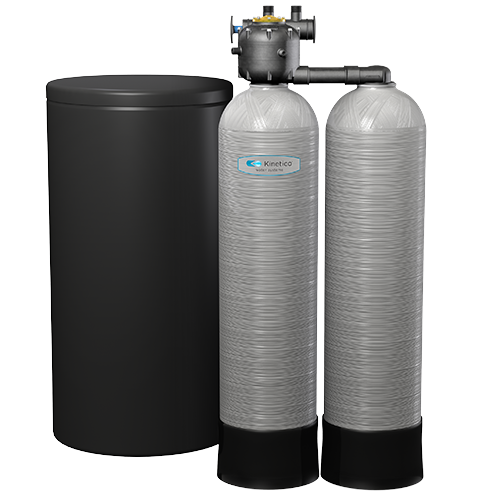
Kinetico softeners also use a twin-tank design, which addresses a limitation common to all single-tank softeners regardless of whether they are electric or not. In a single-tank system, the unit goes offline during regeneration (typically a 2-hour process that is usually set to occur at night). During that window, hard water flows through the bypass and into the home.
The twin-tank design puts two resin tanks in the system. While one tank is actively softening water, the other regenerates. When the first tank's resin is exhausted, the control valve automatically shifts service to the freshly regenerated second tank, and the first tank begins its regeneration cycle. You always have soft water, around the clock. You never notice the regeneration is happening because it never interrupts service.
See the Numbers for Your Home
Cardinal Water Solutions is an authorized Kinetico dealer in Columbus. We can walk you through the cost comparison for your specific water hardness and household size, and show you what the actual operating cost difference looks like over time. Call (614) 555-0100 for a no-pressure consultation.
Get a Quote