
Private well water treatment for Central Ohio homes
Well water is not regulated like city water, so testing and treating it is up to you. Most Central Ohio wells carry hardness, iron, and sulfur all at once. Here is how we test and treat them.
Why well water is different from city water
Columbus city water is treated, tested frequently, and regulated under the Safe Drinking Water Act. If a problem develops in the city supply, the municipality is required to notify customers and address it.
Private well water works differently. Groundwater drawn from a private well is not regulated at the federal level and is not routinely tested by any government agency. The Ohio Department of Health recommends annual testing, but it is not mandatory, and nothing alerts you when your well water quality changes.
You are the person responsible for the quality and safety of your well water. Changes in surrounding land use, septic system issues, drought, flooding, and normal geological variation can all affect well water, sometimes dramatically, without any visible sign at the tap. The aquifers under Franklin, Delaware, Licking, Fairfield, and Pickaway counties carry significant dissolved minerals, particularly calcium and magnesium, iron, manganese, and in some areas hydrogen sulfide.
Common well water problems in Central Ohio
Most Central Ohio well owners deal with several of these at once. A comprehensive water test identifies all of them, so the system we design treats what is actually in your water and nothing you do not need.
High hardness
Well water in Central Ohio commonly tests at 15 to 30 grains per gallon, harder than already-hard Columbus city water, and some deep wells in Delaware and Licking counties test above 40 gpg. This extreme hardness causes rapid scale in pipes, shortens water heater life, and wears out appliances. Learn more about hard water.
Iron and manganese
Iron above 0.3 mg/L causes orange staining on everything it touches. Manganese above 0.05 mg/L causes black or brownish staining. Both are extremely common in Central Ohio well water and frequently occur together. See our iron staining page for the full picture.
Hydrogen sulfide
The rotten egg or sulfur smell in well water comes from hydrogen sulfide gas produced by sulfur-reducing bacteria in the aquifer. It is more common in deeper wells. Even at low concentrations the smell is unpleasant and makes showers and cooking water smell off. See our taste and odor page.
Bacteria and coliform
Total coliform bacteria and E. coli are the most serious well water concerns because they indicate possible contamination. Sources include septic systems, agricultural runoff, surface water infiltration, and aging well casings. You cannot see, smell, or taste it, so annual testing is the only way to know.
Sediment and turbidity
Sand, silt, and grit cause accelerated wear on pumps, valves, and fixtures. Cloudy water from a well can signal surface water infiltration or a deteriorating casing, which also raises contamination risk. A sediment filter is the first line of defense and protects every system installed downstream.
Nitrates
Nitrates come primarily from agricultural fertilizers and septic leachate. Central Ohio is agricultural country, and nitrate contamination in private wells is documented, particularly in rural Franklin, Pickaway, and Fairfield counties. Levels above 10 mg/L are a concern for infants and are best treated with reverse osmosis.
What a thorough well water test should cover
A basic hardness test is a starting point, not a complete picture. Our free on-site analysis covers the parameters we can read on the spot, and we arrange lab testing for the ones that require laboratory analysis.
On-site testing covers
- Water hardness, in grains per gallon
- pH and acidity level
- Iron content, ferrous and ferric
- Manganese
- Hydrogen sulfide, the rotten egg odor
- Turbidity and sediment level
- Total dissolved solids
Lab testing available for
- Total coliform bacteria
- E. coli, the fecal indicator
- Nitrates and nitrites
- Arsenic
- Lead and copper
- VOCs and pesticides, for agricultural areas
When to get a comprehensive lab test
A full lab test, beyond our on-site analysis, is especially important if any of these apply to your property:
- Your well is within 150 feet of a septic system
- Neighboring properties use fertilizers or pesticides
- You have never had your well water tested
- An infant or young child drinks the water
- Your well casing is older than 20 years
- You have noticed a new taste, odor, or staining change
- Your property experienced flooding or a nearby main break
With a private well, the quality of your water is up to you
No agency monitors your well
If bacteria gets into your well, no one will tell you. If your iron level spikes, no one will notify you. Private wells are not tested by any government agency, and changes from drought, flooding, or nearby land use can show up without any sign at the tap.
Testing is how you stay ahead of it
An annual test, at minimum for bacteria, is the only reliable way to catch a change before it becomes a problem. We test your water on-site, arrange lab work where it is needed, and design treatment around what your results actually show.
Kinetico systems for well water
Most Central Ohio well homes start with a specialty filter ahead of a softener, and add a drinking water station where nitrates or arsenic are present. We size every component to your actual test results, never to a one-size-fits-all box.
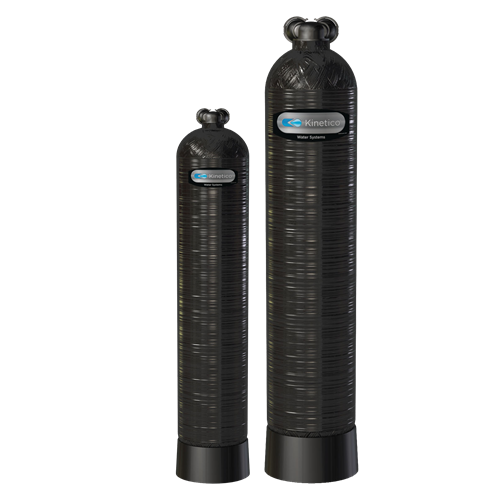
Specialty iron and sulfur filter
Non-electric, no added chemicals, sized to your water
Our go-to first stage for well water. The oxidizing media bed converts dissolved iron into particles, captures them, and backwashes them out, removing manganese and hydrogen sulfide along the way. It runs ahead of the softener so iron never reaches the resin.
- Removes dissolved and particulate iron
- Handles manganese and hydrogen sulfide
- Non-electric, no added chemicals to operate
- Sized to your actual iron and flow rate
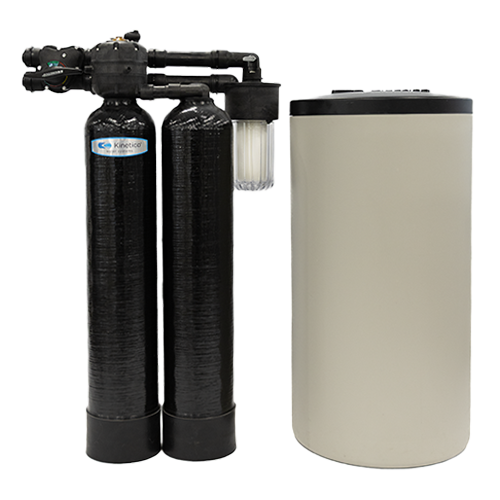
Premier Series softener
Twin-tank, non-electric, built for high hardness
Installed after the filter, the Premier handles the high hardness common in Central Ohio wells. Its twin-tank design keeps soft water flowing around the clock and regenerates on actual use rather than a timer, so nothing is wasted.
- Twin-tank, soft water 24 hours a day
- Regenerates on demand, not on a timer
- Non-electric, powered by moving water
- Sized to your hardness and household flow
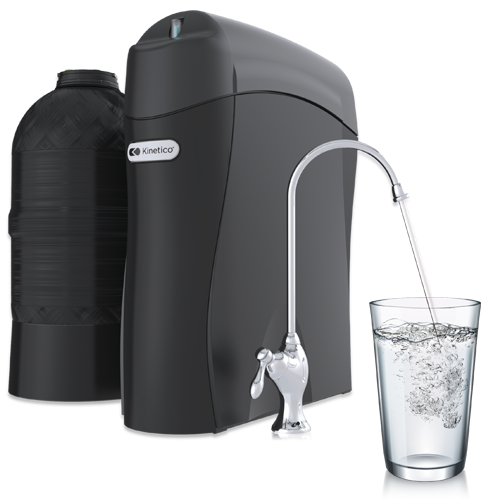
K5 Drinking Water Station
Reverse osmosis for the kitchen tap
Installed under the kitchen sink, the K5 removes any remaining dissolved contaminants, including nitrates, arsenic, and more, for drinking and cooking water that is as thoroughly filtered as possible. Where a test shows nitrates or arsenic, this stage is necessary.
- Reverse osmosis at the drinking tap
- Reduces nitrates, arsenic, and more
- Holds extensive NSF certifications
- Dedicated faucet at the kitchen sink
Not sure which combination your well needs? Compare every option on the specialty treatment systems page and the water softeners page, or let us test your water first and recommend the right one.
Common questions from Central Ohio well owners
The Ohio Department of Health recommends testing private well water at least once per year, at minimum for bacteria. Annual testing matters because well water quality can change without any visible sign, from seasonal variation, changes in surrounding land use, septic changes, or weather events. Wells near agricultural land or septic systems should be tested more often. If you have never tested your well, start with a comprehensive panel that covers all the major parameters, and we can help you set the right frequency for your property.
That depends entirely on what is in your specific well, which is why testing is the only honest answer. Some Ohio wells produce water that is safe to drink untreated, though it may still have hardness and aesthetic issues. Many others contain iron, manganese, hardness, or bacteria at levels that create problems ranging from staining to genuine health concerns. Most Central Ohio well owners who test for the first time find at least one parameter above recommended levels. The responsible approach is to test first, then treat based on what the test shows.
High hardness and iron are by far the most common, and they frequently occur together. The limestone-rich geology here produces groundwater that is naturally very high in calcium and magnesium and often carries significant iron and manganese. It is not unusual to see wells testing above 25 to 30 grains per gallon with iron well above the EPA aesthetic guideline. Hydrogen sulfide, the rotten egg smell, is the third most common issue, especially in deeper wells. Bacteria turns up in a meaningful share of wells too, which is why it should always be part of a test panel.
Kinetico's softeners and iron and sulfur filters are non-electric. They run entirely on the kinetic energy of moving water, with no timer and no circuit board. That is a real advantage for rural well owners during storm outages, since the treatment keeps working. The UV disinfection stage does need power, because it is fundamentally an electrical technology, and the K5 drinking system is otherwise non-electric. For most well systems in our area, only the UV component requires electricity.
Yes. Separation distance between a well and a septic system is regulated in Ohio, with minimums set by county health departments, typically 50 to 100 feet depending on soil and design. But separation distance is a minimum, not a guarantee. Older properties may not meet current requirements, and high water tables, certain soils, and flooding can let bacteria travel farther than expected. Any well within 200 feet of a septic system should be tested annually for bacteria. If a test comes back positive, do not drink the water until the source is identified and the well is treated and retested. UV disinfection is the most effective, lowest-maintenance permanent solution for ongoing bacteria risk.
The honest answer is that cost depends on what your test shows. A single softener for hardness costs significantly less than a full multi-stage system with iron filter, softener, UV, and drinking station. We do not recommend or quote systems before testing your water, because there is no reason to pay for treatment you do not need. The free water analysis gives us what we need to quote specifically for your situation, and we offer financing so the cost of the right system is not a barrier. Call (614) 555-0100 to get started.
No obligation, no guesswork
Schedule a free well water analysis for your Central Ohio home.
We test your well water on-site, identify every problem, and design the right system for what your water actually contains. You will know exactly what is in your well and exactly what it takes to fix it.