
Hard water in Columbus, Ohio: what it does and how to fix it
At 15 to 22 grains per gallon, Columbus water is among the hardest in Ohio. Here is what that means for your home, and how a Kinetico softener solves it for good.
What hard water actually is
Hard water is water with a high concentration of dissolved minerals, mainly calcium and magnesium. Those minerals are completely natural. They come from the limestone and dolomite that Columbus groundwater flows through before it reaches your tap.
Hardness is measured in grains per gallon (gpg). Below 3.5 gpg is soft, 3.5 to 7 gpg is moderate, 7 to 10.5 gpg is hard, and anything above 10.5 gpg is very hard. Columbus city water tests at 15 to 22 gpg, nearly double the threshold for very hard, and many wells in Franklin, Delaware, and Licking counties test higher still.
Hard water is not a safety issue and it will not make you sick. But it does cause real, measurable wear on your plumbing, your appliances, and your fixtures over time, and it costs you money every month.
How to tell if you have hard water
Most Columbus homeowners notice hard water long before they measure it. The minerals leave the same fingerprints everywhere they go: white scale on anything water touches, film on glassware, and soap that never quite lathers the way it should.
If several of the items on this list describe your home, hard water is almost certainly the cause. A free water test confirms the exact hardness and tells us how to size the right system for your household.
Common signs of hard water
- White scale on faucets, showerheads, and fixtures
- Spotted, cloudy glassware after the dishwasher
- Dry, itchy skin and dull, brittle hair after showering
- Soap and shampoo that will not lather or rinse clean
- Stiff, scratchy laundry and faded colors
- Water heaters and washers wearing out years early
- Using far more soap and detergent than you expect
What hard water does to your home
These are not cosmetic annoyances. They are compounding costs that grow every month you leave the water untreated.
Scale on pipes and fixtures
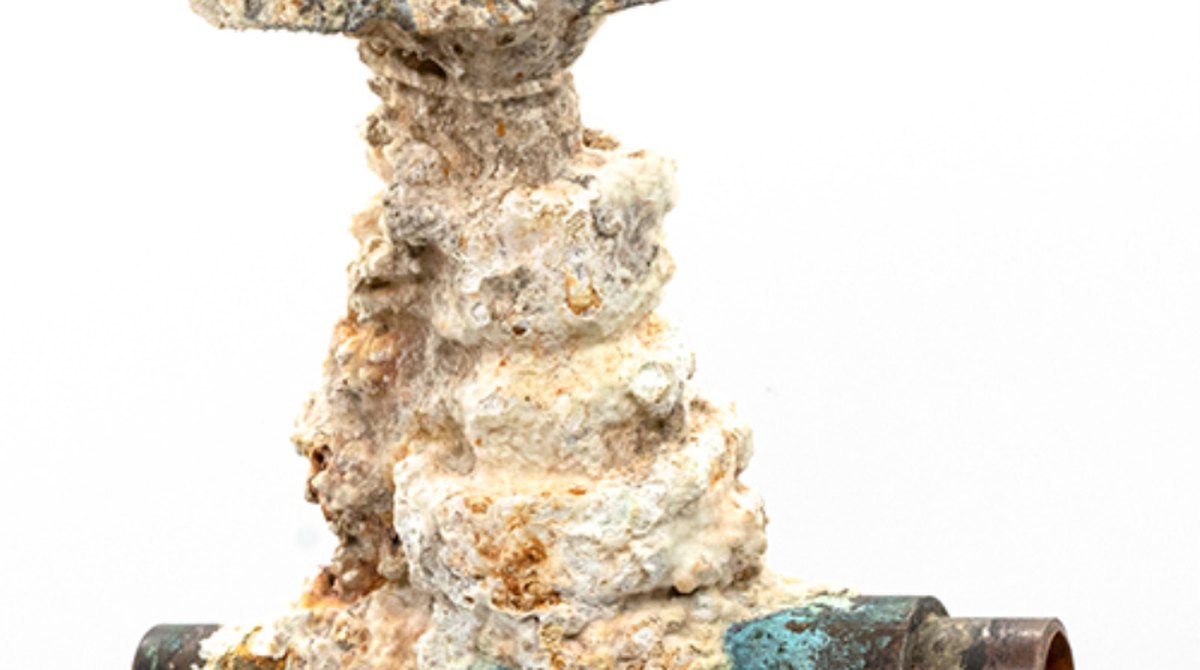
As water heats or evaporates, calcium and magnesium precipitate out and leave white deposits inside pipes, on showerheads, and around faucet bases. Over time this scale restricts flow, drops your water pressure, and forces early pipe and fixture replacement.
Spotted dishes and glassware
Mineral residue stays behind as every droplet dries. A dishwasher cannot stop it, because the minerals reappear as the water evaporates. Glasses look permanently foggy and dishes show film no matter how much detergent you use.
Dry skin and brittle hair
Dissolved minerals bind to skin and hair during bathing and strip away natural oils. Skin feels tight or itchy after a shower, hair feels dry and dull, and soap and shampoo never quite rinse clean.
Shorter appliance life
Scale builds up inside water heaters, dishwashers, washing machines, and coffee makers. The U.S. Department of Energy has found a scaled water heater can use up to 30% more energy, and appliances in hard water homes often fail 3 to 5 years earlier than expected.
Faded, stiff laundry
Minerals bond to fabric fibers in the wash. Colors fade faster, whites turn gray or yellow, and towels and clothing feel scratchy instead of soft. No amount of fabric softener fully makes up for it.
More soap and detergent
Hard water keeps soap from lathering, because the minerals react with soap before it can foam. Hard water households use 30 to 50% more soap, shampoo, and detergent to get the same results a soft water home gets easily.
What hard water quietly costs a Columbus home
Where the money goes
A typical Columbus family of four spends hundreds of dollars a year on untreated hard water: excess cleaning products, wasted water heater energy, premature appliance replacement, and steady plumbing and fixture wear.
What a softener changes
Remove the minerals at the point of entry and those costs largely disappear. A Kinetico water softener typically pays for itself in 3 to 5 years through lower energy use, longer appliance life, and far less product down the drain.
How a Kinetico softener fixes hard water for good
A softener does not filter hard water, it removes the minerals through a process called ion exchange. Water passes through a resin tank where calcium and magnesium swap for a trace of sodium, far too little to taste, and that causes no problems in your plumbing, appliances, or cleaning. When the resin is full, a salt brine rinse flushes the minerals down the drain and recharges it for the next cycle.
Non-electric operation
Kinetico runs on the kinetic energy of moving water. No electricity means no timers to set, no circuit boards to fail, and no downtime during a power outage.
Soft water 24 hours a day
The twin-tank design keeps one tank in service at all times. While one regenerates, the other supplies soft water without interruption, so you never go to bed with hard water in your pipes.
Up to 75% less salt
On-demand regeneration means the system only uses salt when the resin is actually exhausted, not on a guessed schedule. Less salt, less wasted water, lower operating cost.
The softener most Columbus homes start with
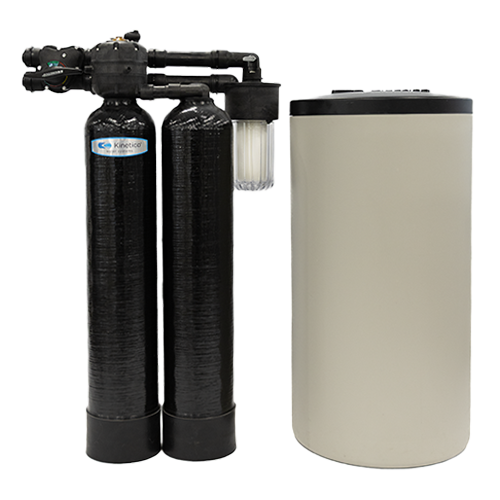
Premier Series Softener
Twin-tank, non-electric, built for very hard water
The system we recommend most for Columbus and Central Ohio. The twin-tank design delivers soft water around the clock and handles the 15 to 22 gpg hardness our area is known for with room to spare.
- Non-electric, demand-based regeneration
- Twin tanks for uninterrupted soft water
- Up to 75% less salt than timer softeners
- Made in Newbury, Ohio since 1970
Not sure which model fits your household size and hardness level? Compare every softener we install on the water softeners page, or let us test your water first and recommend the right one.
Hard water questions we hear in Columbus
Columbus city water typically tests at 15 to 22 grains per gallon, depending on the season and the water source blend. That is classified as very hard, nearly double the 7 gpg threshold for hard water. Wells in surrounding Franklin, Delaware, Licking, and Fairfield counties can test even higher, with some locations above 30 gpg.
Yes. Hard water does not pose a health risk. Calcium and magnesium are minerals the body needs, and some studies suggest moderately hard water may offer a small dietary benefit. The trouble with hard water is what it does to your pipes, appliances, laundry, and skin, not what it does to your health.
No. A working softener removes calcium and magnesium and adds only a very small amount of sodium, typically 20 to 40 milligrams per liter. That is well below the level most people can taste, and less than the sodium in a single slice of bread. If softened water ever tastes salty, the softener may need service. If you are on a sodium-restricted diet, a reverse osmosis drinking system at the kitchen tap removes the sodium completely.
Much less than conventional timer softeners. Kinetico regenerates on demand, only when the resin is actually exhausted, rather than on a fixed schedule that wastes salt whether it is needed or not. Independent studies show Kinetico systems can use up to 75% less salt than comparable timer-based competitors. We can give you a specific estimate during the free water analysis.
We recommend it. A softener is excellent at removing hardness, but it does not remove chlorine, chloramines, or other dissolved contaminants. Pairing a softener with the Kinetico K5 Drinking Water Station at the kitchen tap gives you soft water throughout the house plus highly purified water for drinking and cooking. See our drinking water systems for details.
Most homeowners notice it within the first few days. Skin feels softer after showering, hair is easier to manage, and soap lathers and rinses more easily. After a few weeks dishes come out of the dishwasher without spots, and within 2 to 3 months existing scale on showers and faucets softens and wipes away more easily. The benefits to appliances and plumbing build over years.
Solve hard water for good
Get a Kinetico softener quote for your Columbus home.
We test your water first, then recommend the right system for your hardness level and household size. No guessing, no pressure, no obligation.