Hard Water in Columbus, Ohio: What It Does to Your Home (And How to Fix It)
At 15 to 22 grains per gallon, Columbus water is among the hardest in Ohio.
What is hard water?
Hard water is water that contains a high concentration of dissolved minerals, primarily calcium and magnesium. These minerals are completely natural. They come from the limestone and dolomite rock formations that Columbus groundwater flows through before it reaches your tap.
Water hardness is measured in grains per gallon (gpg). The general scale:
- Soft: less than 3.5 gpg
- Moderate: 3.5 to 7 gpg
- Hard: 7 to 10.5 gpg
- Very hard: above 10.5 gpg
Columbus city water tests at 15 to 22 grains per gallon, nearly double the threshold for "very hard." Many well water sources in Franklin, Delaware, and Licking counties test even higher.
Hard water is not a safety issue. It will not make you sick. But it causes real, measurable physical damage to your home, your appliances, and your plumbing over time, and it costs you money every month.
Columbus water hardness at a glance:
15 to 22 gpg
Among the highest hardness levels in Ohio. The EPA recommends no more than 3.5 gpg for ideal household use.
What hard water does to your home
These are not cosmetic annoyances. They are compounding costs that grow every month.
Scale on fixtures and pipes
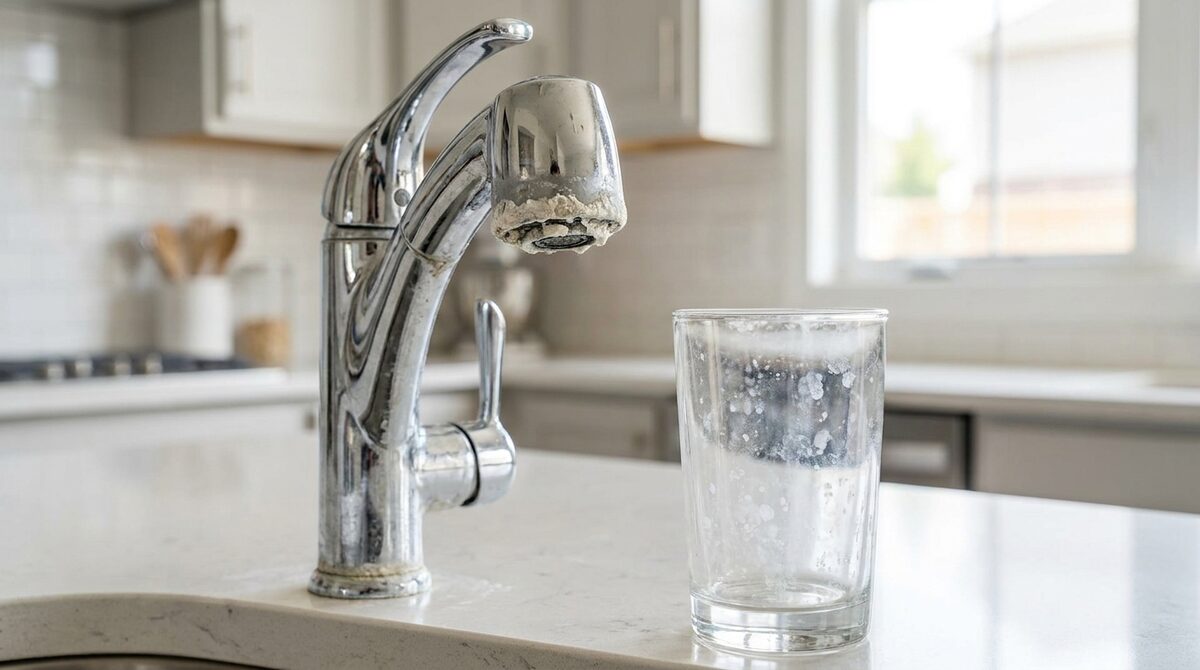
Calcium and magnesium precipitate out of water as it heats or evaporates, leaving white mineral deposits inside pipes, on showerheads, and around faucet bases. Over time this scale restricts water flow, reduces pressure, and forces early pipe replacement.
Spotted, filmy dishes and glassware
Water droplets dry and leave mineral residue on every surface they contact. Dishwashers cannot prevent this because the minerals come back out as the water evaporates. Glasses look permanently foggy. Dishes show white film regardless of how much detergent you use.
Dry skin and brittle hair
Dissolved minerals in hard water bind to skin and hair during bathing, stripping away natural oils. The result is skin that feels tight or itchy after showering and hair that feels dry, dull, or brittle. Soap and shampoo also do not rinse off as cleanly in hard water.
Shortened appliance lifespan
Scale accumulates inside water heaters, dishwashers, washing machines, and coffee makers. A water heater with significant scale buildup uses up to 30% more energy to heat the same water, according to U.S. Department of Energy research. Appliances in hard water areas typically fail 3 to 5 years earlier than expected.
Faded, stiff laundry
Hard water minerals bond to fabric fibers during washing. Colors fade faster. Whites turn gray or yellow. Towels and clothing feel scratchy instead of soft. No amount of fabric softener fully compensates for the mineral bonding that hard water causes.
Excess soap and detergent use
Hard water prevents soap from lathering properly. The minerals react with soap molecules before they can foam. Households with hard water use 30 to 50% more soap, shampoo, laundry detergent, and dishwasher detergent to achieve the same cleaning results as soft water households.
The real cost of hard water in Columbus
These are not estimates pulled from thin air. They are documented costs that researchers and utility studies have measured repeatedly.
Where the money goes
Cleaning products: The average hard water household spends 30 to 50% more on soap, detergent, and shampoo than a soft water household. For a family of four, this adds up to $150 to $300 per year in excess cleaning product costs alone.
Water heater energy: Scale insulates the heating element from the water. A water heater with just a quarter inch of scale uses approximately 30% more energy, according to New Mexico State University research. In Ohio, where gas water heaters are common, this translates to $80 to $150 per year in excess energy costs.
Early appliance replacement: A dishwasher that should last 12 years might fail at 8. A washing machine rated for 15 years might need replacement at 10. Spread over the appliance's life, hard water adds $100 to $200 per year in premature replacement costs for a typical home.
Plumbing repairs: Scale-narrowed pipes and corroded fixtures eventually need professional attention. Scale buildup in water heaters causes premature tank failure, flooding risk, and emergency replacement costs that are far higher than routine maintenance would have been.
$500 to $800
Estimated annual cost of untreated hard water for a typical Columbus family of four, including excess cleaning products, reduced water heater efficiency, and shortened appliance lifespan.
A Kinetico water softener typically pays for itself in 3 to 5 years through energy savings, appliance protection, and reduced product use.
Quick cost comparison
| Excess cleaning products | $150 to $300/yr |
| Water heater energy waste | $80 to $150/yr |
| Early appliance replacement | $100 to $200/yr |
| Plumbing and fixture wear | $100 to $150/yr |
How a Kinetico water softener solves hard water permanently
A water softener does not filter hard water. It removes the minerals through a process called ion exchange, replacing calcium and magnesium with a trace amount of sodium that causes no problems in plumbing, appliances, or cleaning.
How ion exchange works
Water passes through a resin tank filled with tiny resin beads that carry a sodium charge. Calcium and magnesium ions are attracted to these beads and bind to them, releasing sodium ions into the water in their place. The calcium and magnesium stay on the resin. The water that comes out is soft.
Periodically, the resin needs to be regenerated by flushing it with a salt brine solution. This washes the calcium and magnesium down the drain and recharges the resin beads for another cycle.
Why Kinetico is different
Most water softeners use a timer: they regenerate on a schedule regardless of how much water you actually used. This wastes salt and water, and if you use more water than expected, you may run out of soft water before the scheduled regeneration.
Kinetico softeners regenerate on demand, measured by actual water use, not a clock. The twin-tank design means one tank is always in service while the other regenerates, so you have soft water 24 hours a day without interruption. You never go to bed with hard water running through your pipes.
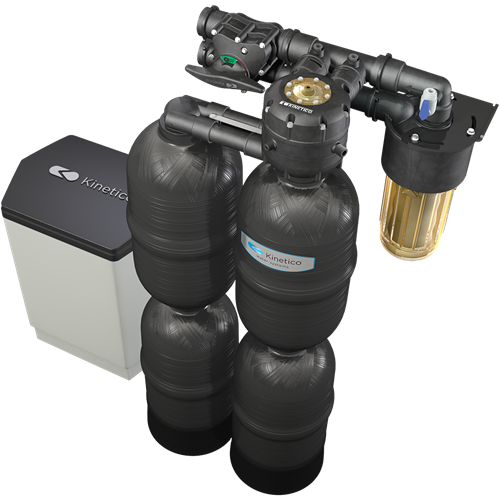
Kinetico Premier Series Water Softener, most popular for Columbus homes
Non-electric operation
Kinetico runs on the kinetic energy of moving water. No electricity means no timers to set, no circuit boards to fail, and no downtime during power outages.
Soft water 24 hours a day
The twin-tank design keeps one tank in service at all times. While one tank regenerates, the other supplies soft water without interruption.
Up to 75% less salt
On-demand regeneration means the system only uses salt when it actually needs to regenerate, not on a guessed schedule. Less salt, less water waste, lower operating cost.
Common questions about hard water in Columbus
Columbus city water typically tests at 15 to 22 grains per gallon (gpg), depending on the season and specific water source blend. This is classified as very hard. For reference, water is considered soft at below 3.5 gpg and hard at above 7 gpg. Columbus is nearly double what is required to qualify as very hard. Well water in surrounding Franklin, Delaware, Licking, and Fairfield counties can test even higher, with some locations exceeding 30 gpg.
Yes. Hard water does not pose a health risk. Calcium and magnesium are minerals the body needs, and consuming them through water at typical hard water levels is not harmful. Some studies suggest that drinking moderately hard water may actually provide a small dietary benefit. The problem with hard water is what it does to your pipes, appliances, laundry, and skin, not what it does to your health.
No. A properly functioning water softener removes calcium and magnesium and replaces them with a very small amount of sodium. The sodium level in softened water is typically 20 to 40 milligrams per liter, which is well below the 200 mg/L threshold at which most people can detect sodium taste. For comparison, a slice of bread contains about 170 mg of sodium. You will not taste the difference in softened water. If softened water tastes salty, the softener may be malfunctioning. If you are on a sodium-restricted diet, a reverse osmosis drinking system at the kitchen tap removes the sodium completely.
Much less than conventional timer-based softeners. Kinetico's on-demand regeneration means the system only regenerates when the resin is actually exhausted, not on a fixed schedule that wastes salt whether it is needed or not. Independent studies have shown that Kinetico systems use up to 75% less salt than comparable timer-based competitors. The exact amount depends on your household's water use and your local hardness level. Our water professional can give you a specific estimate during the free water analysis.
We recommend it. A water softener is excellent at removing hardness minerals, but it does not remove chlorine, chloramines, VOCs, nitrates, pharmaceuticals, or other dissolved contaminants. For Columbus city water users, a softener paired with the Kinetico K5 Drinking Water Station at the kitchen tap gives you the best of both worlds: soft water throughout the house for appliance protection and cleaning, and highly purified water at the tap for drinking and cooking. Many families find this combination eliminates the need to buy bottled water entirely.
Most Columbus homeowners notice a difference within the first few days. Skin feels noticeably softer after showering. Hair has more luster and is easier to manage. Soap and shampoo lather more easily and rinse off more completely. After a few weeks, dishes and glassware start coming out of the dishwasher without spots. Within 2 to 3 months, existing scale deposits in showers and on faucets begin to soften and are easier to clean. The long-term benefits to appliances and plumbing build over years.
Get a Kinetico water softener quote for your Columbus home
We test your water first, then recommend the right system for your hardness level and household size. No guessing, no upselling beyond what you need.